

The laws around foraging in Britain are a slightly complicated subject and one with local and national variation.
This article is meant as a brief overview of the main legislation that covers the law around foraging in the UK.
Not quite foraging:
Walking on private land in England and Wales, without permission implicit or explicit is trespass, this isn’t a crime but is a civil offence, and you can be sued. Implicit permission is given in many areas, such as land owned by the Wildlife Trust, National Trust, local authorities etc. Scotland has a right to roam with a few exceptions.
Theft act 1968
“A person who picks mushrooms going wild on any land, or who picks flowers, fruit or foliage from a plant growing wild on any land, does not (although not in the possession of the land) steal what he picks, unless he does it for reward or for sale or other commercial purpose. (For purposes of this subsection ‘mushroom’ includes any fungus, and ‘plant’ any shrub or tree.)”
This means that in areas where you are allowed access you can legally pick your wild foods, as long as you stick to the four F’s, Foliage, Fungi, Fruits, and Flowers, cutting branches isn’t allowed.
There are exceptions to this – local byelaws often forbid foraging in certain areas. The byelaws should be visible on a sign at the entrance to the land. The new forest had byelaws governing the collection of fungi.
Country Side and Rights of Way (CROW) Act 2001
This act gave walkers access to vast tracks of land that was previously unaccessible. However that person its not also given the right to forage.
Your entitlement to walk on the land ceases if you “intentionally removes, damages, or destroys any plant, shrub, tree or root, or any part of a plant, shrub tree or root.” And you return to committing trespass.
However if your on a right of way and on CROW Land you can still forage along the right of way.
Wildlife and Countryside Act 1981
This act aimed at preserving our countryside states “…if any person.. not being an authorised person, intentionally uproots any wild plant… he shall be guilty of an offence.”
Some rare plants and fungi are protected by the list in Schedule 8, and it is illegal to damage these in any way.


Sites of Special Scientific Interest (SSSI’s)
SSSI’s often protect a few corner-stone species that made the area a SSSI in the first place, and it is illegal to damage any of these species. Often though a list of “operations likely to damage” the SSSI also includes a statement similar to removal of or damage to any living plant animal or fungi. These “operations” therefore are not all out banned but do need permission from the correct conservation body. These are: Natural England, Natural resources Wales and Scottish Natural Heritage. Permission for appropriate gathering of commonly found plants and fungi is often not something that is denied however.
Now that you have an overview of foraging and the laws that surround it have a look at some of the suggested recipes we have for foraged foods.
A Selection of Our Foraging Recipes
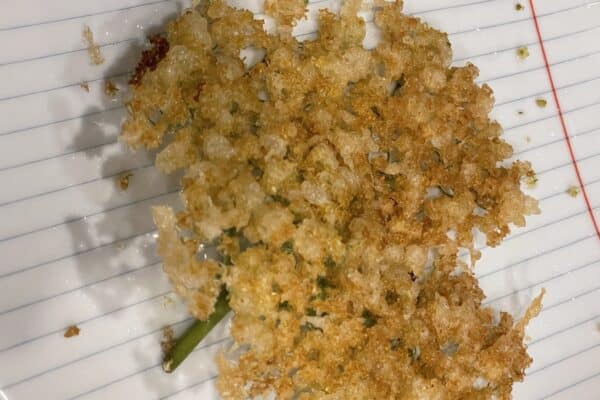
Elderflower Fritters with a twist
These elderflower fritters made great light summer desert. The sparkles of the lemonade make the batter light and crispy and the sweetness and sharpness compliment the elderflowers wonderfully. The shape of the flower heads makes deep frying them a reasonably safe and easy doddle.

Wild Garlic and Jelly Ear Ramen
A perfectly warming spring soup.
This recipe is ideal for those bright crisp spring days that hint at the warmth to come but still need a nice warming soup to follow a day outside.
This super quick, super simple, super warming soup highlights the best elements of the foraged foods it features.

Elderflower Champagne
This recipe compared to the lower alcohol content one we published earlier in the week, is more demanding of your time, but the rewards are well worth the effort. Using a much higher volume of elderflowers and leaving them with access to the air for longer allows the volume of yeasts to multiply before bottling.

Elderflower Cordial
This quintessentially British summertime drink. Is fantastic with either cold water, sparking water or in a range of cocktails. Simple to make and delicious you’ll wonder why you’ve been buying it from the shops for so many years.

Greek Style Dolmades With Lime Leaves
Lime leaves are one of the unsung heroes of the foraging world. They are one of the few leaves that taste good, even when full grown straight off the tree, and make a great base for a foraged salad. In this recipe I’m replacing the traditional vine leaves from dolmades with lime leaves, and don’t tell the Greeks but I think it might even improve the dish!

Elderflower Champagne
If you have been put off making elderflower champagne due to hearing horror stories of exploding glass bottles then this is the recipe for you.
Chilled it is a perfect companion for curling up in a hammock with a good book in the sunshine.

Wild Garlic Butter
This easy to make and tasty flavoured butter works really well with a range of dishes, from garlic bread, garlic mushrooms and just topped onto a warm roll.

Nettle Pasta with Jack by the Hedge Pesto
I had always been lead to believe there was a dark art to the making of pasta, and this recipe convinced me otherwise. I’m sure that any Italian would scorn the green strands that this recipe creates. However I spent two years of my childhood eating only pasta for tea (apologies Mum), and this passed my muster.

Nettle Cordage – Lizzy Rambles Episode 6 – 10 May
In this article I’ll show you how to make your own natural cordage from nettles.
Cordage would have been incredibly important to our ancestors, Otzi the Ice Man – a frozen body from around 5000 years ago recently found having melted out of a retreating glacier in Italy has lime bark cordage on his person.
Continue Reading Nettle Cordage – Lizzy Rambles Episode 6 – 10 May

Nettle Champ
This simple recipe shows you how to make Nettle Champ, a mash with nettles and onions. This can easily be adapted to nettle soup with…

Gorse Cordial
A really tasty refreshing summer drink. It is remarkably easy to make and has a wonderful luminescent yellow colour.
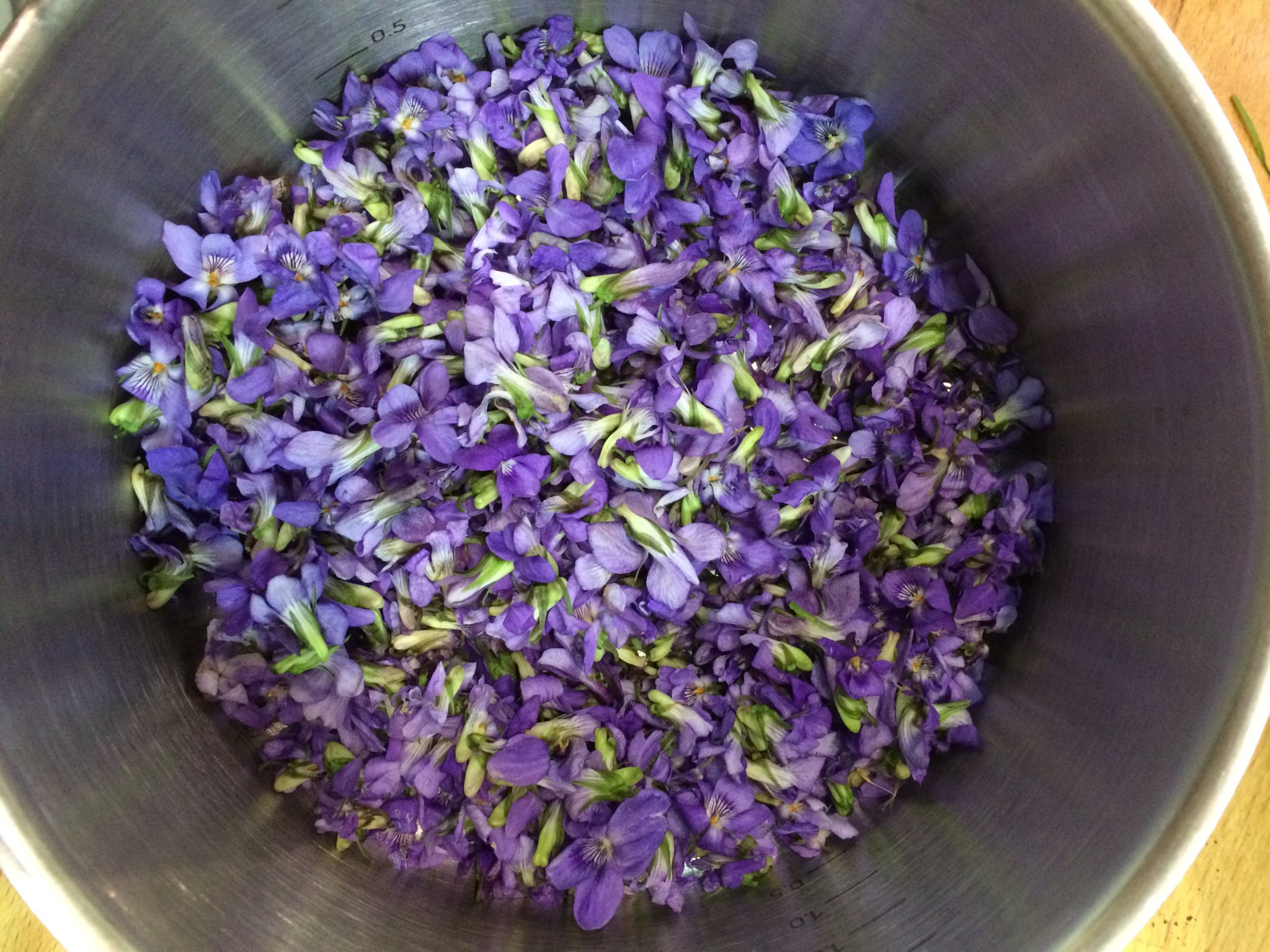
Violet Syrup
We have a profusion of violets growing at our house, and this recipe is a perfect way to bottle that stunning violet colour. This lovely syrup is fantastic drizzled over ice cream, and also very tasty in a Cocktail with Gin and Bubbles.

Dandelion Honey
This wonderful alternative to honey is divine and like having your own little jar of sunshine. It’s the closest I’ve ever managed to come to putting this wonderful morning, with such a sky you never did see, in a box for me. It uses the flower petals, those bright little rays of sunshine that can brighten anyone’s mood. Unless you’re a gardener and they are in your veg bed – if you view your dandelions as a “shame of dandelions” maybe this recipe will make you see them in a brighter light?

Foraging Spring Greens
The snow drops are creating blankets of bright whites contrasting with the dark green grasses and muddy gaps on our roadside edges. Gardens and parks are dotted with the bright colours of crocuses. The birds have started their singing, from the robin who continues all winter, but now we are starting to hear the great tits, the song thrushes, the drilling of the greater spotted wood pecker and many more. All of this is telling us spring is on its way.

Elderberry Syrup
Elderberries can be so prolific that the branches are hanging very low dripping with the dark red fruit. So it seems a shame not to utilise on this incredible fruit.

Crab Apple and Blackberry Butter
A fruit butter so called because it spreads like butter, looses all links to dairy butters at this point. Its a soft set mix of fruit puree and sugar, that goes wonderfully with a whole mix of options, on toast, stirred into greek yogurt, with roasted venison and with BBQ duck breast.

Chutney Making – Apple and Onion Chutney
How to make a traditional apple & onion chutney
It’s that time of year again when the berries, and fruits are calling out for our attention.
Growing up on small holding in rural Surrey, I was raised producing these preserves year-on-year to store the garden’s produce. This recipe is adapted from a Ministry of Agriculture Fisheries and Food recipe from WW2 and is commonly referred to by friends and family now as Chaldon Chutney after the village I grew up in.
10 thoughts on “Foraging and the law”
Comments are closed.