

Higher Alcohol Content and Lots of Fizz
This is a great recipe if you are looking to enjoy sipping a strong, sweet, highly sparking elderflower champagne enjoying the heady heights of spring with everything in full bloom, the birds singing non-stop and the sun always in the sky.
This recipe compared to the lower alcohol content one we published earlier in the week, is more demanding of your time, but the rewards are well worth the effort. Using a much higher volume of elderflowers and leaving them with access to the air for longer allows the volume of yeasts to multiply before bottling.
I would very strongly recommend that you store this in bottles designed to take fizzy drinks. I have a stash of old lemonade and tonic plastic bottles just for this purpose. A cupboard filled with sticky sweet exploded elderflower champagne is not a good look.
Read more about the Elder tree in our factfile on Elder Trees here.
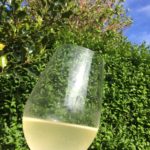
Elderflower Champagne – Higher Alcohol and More Bubbles
Equipment
- 7-8 liters of clean sterilised bottles that can take pressure – I have a batch of old lemonade and tonic bottles I use.
- Muslin
- Large Pan/bowl to keep everything in
- Funnel
Ingredients
- 1 Carrier Bag Elderflowers a standard sized carrier bag is about the right volume of elderflower heads although you don’t have to use one to collect them in.
- 2 kg Sugar white
- 3 Litres Hot Water
- 3 Litres Cold Water
- 1 Lemon juice and jest
- 1 Orange juice and jest
- 1 Lime juice and jest
- 2 Tbsp Cider Vinegar
Instructions
- Pick your elderflowers – give each tree a sniff test, some smell sweet and summery – others like cats wee. Leave the latter ones for elderberries later in the year. Don’t pick a tree bare, but leave lots for other people and wildlife that might want a share too. Do check out our blog on foraging and the law here.
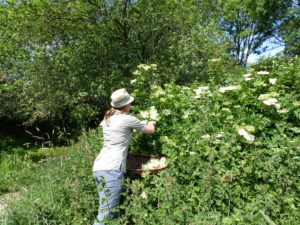
- Leave them out in the shade for a short while to allow the creatures inhabiting them to escape.
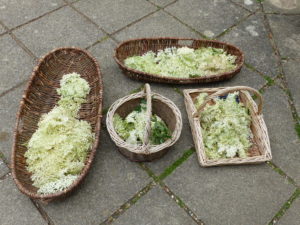
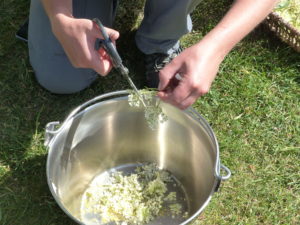
- Then cut off as much stem as your patience allows. The stem contains trace elements of cyanade so it is best to remove as much as possible, but it’s also frustratingly time consuming.
- Mix the hot water and sugar together, stir well to dissolve the sugar.
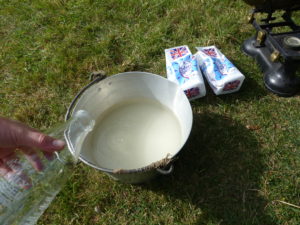
- Add the cold water.
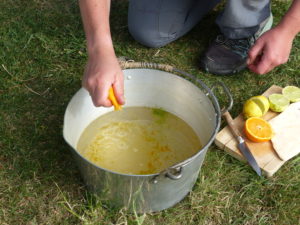
- Add all the other ingredients, and stir well.
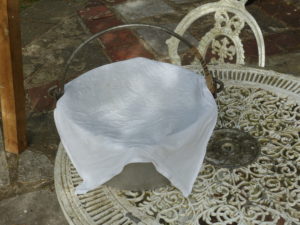
- Cover with a muslin. Leave outside for 4 days in a cool slightly breezy space. This will help it collect more wild yeasts, and start the fermentation process.
- If after 2 days no yeast has appeared, add a pinch of dried yeast and restart the four days.
- Strain though a sieve lined with a muslin.
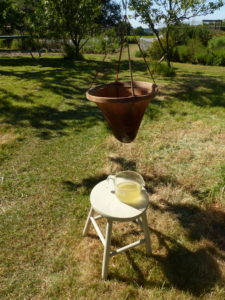
- Decant into sterilised bottles that can take pressure!
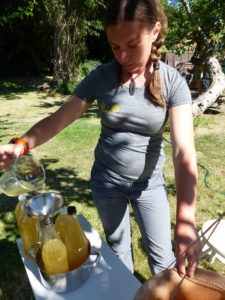
- Seal and leave to ferment in a cool dark place for a further 8 days.
- Enjoy chilled.

