

Lower Alchol content and Gentle Fizz
If you have been put off making elderflower champagne due to hearing horror stories of exploding glass bottles then this elderflower bubbles recipe is the one for you.
It has relatively little yeast involved, therefore only a little alcohol, and minimal levels of fizz, so very low risk of exploding. Served chilled our elderflower bubbles is a perfect companion for curling up in a hammock with a good book in the sunshine.
In fact this recipe came to me via a friend from a baptist minister who had convinced himself that it was alcohol free. The bubbles will tell you this is NOT the case…
If your after a little more investment of time and risk for a higher rate of alcohol check out our elderflower fizz recipe.
Read more about the Elder tree and some of the folklore that surrounds it in our factfile on Elder Trees here.

Elderflower Champagne – Lower Alcohol and Gentle Fizz
Equipment
- Muslin
- 5 liters of Clean Bottles that can take pressure – Old Sparking water or lemonade bottles are ideal.
Ingredients
- 6 Heads Elderflowers
- 1.5 Pounds Sugar white
- 2 Tbsp Cider vinegar
- 1 Lemon zest and juice
- 4.5 litres Water
Instructions
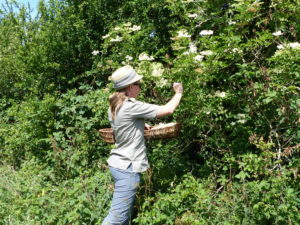
- Pick your elderflowers – give them a sniff test, some smell sweet and summery – others like cats wee. Leave the latter ones for elderberries later in the year. Don’t pick a tree bare. But with only 6 heads you should be able to gather this all from a good smelling tree without making much impact. Do check out our blog on foraging and the law here.
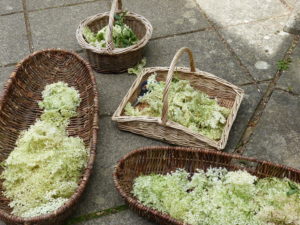
- Leave them out for a short while in the shade for the creatures inhabiting them to escape.
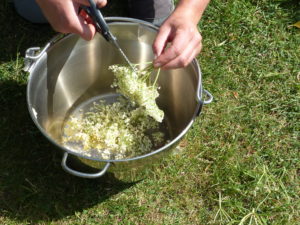
- Cut off the majority of the stems, leaving just the flowers. The wood and the leaves of elder contain trace elements of cyanide that is best avoided.
- Add the water and sugar together, stir well to dissolve the sugar.
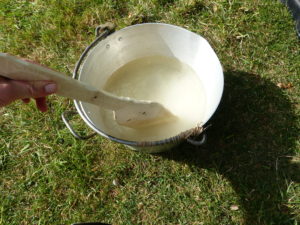
- Add all the other ingredients. Stir well.
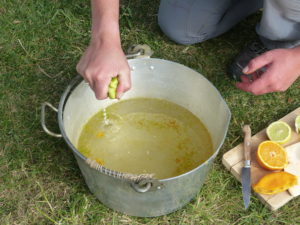
- Leave for 24 hours covered with a muslin, outside in a cool slightly breezy space. This will help it collect more wild yeasts.
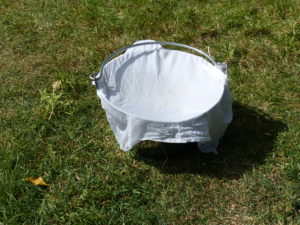
- Strain though a muslin.
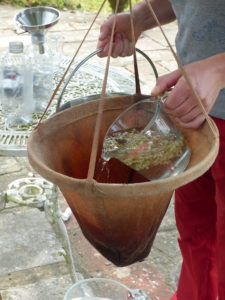
- Bottle into bottles that are designed to take some pressure.
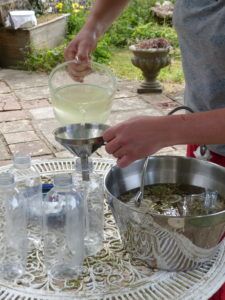
- Leave in a cool dark place for two weeks.
- Enjoy chilled in the sunshine.



Hi Lizzy. Does the champagne need to be kept in the fridge? Would not have room for a whole batch if this is the case.
Nope. Store in a cupboard until you want to drink it. I’d recommend serving chilled.