There is so much to forage at this time of year. Many people see that the flush of the hedgerows is over, the flowers are out and many of the leaves we foraged in April are now tough stringy and bitter. So they pause on their foraging journey until the autumn. They are missing out on a wonderful range of forgeable delights.
A huge number of our native and naturalised trees can be foraged for a range of materials many of which are edible and more importantly tasty. As the sap starts to rise, before the first hints of green become visible, the buds will swell and tinge the tips of the trees with a beautiful palette of colours, mostly pinks and purples.
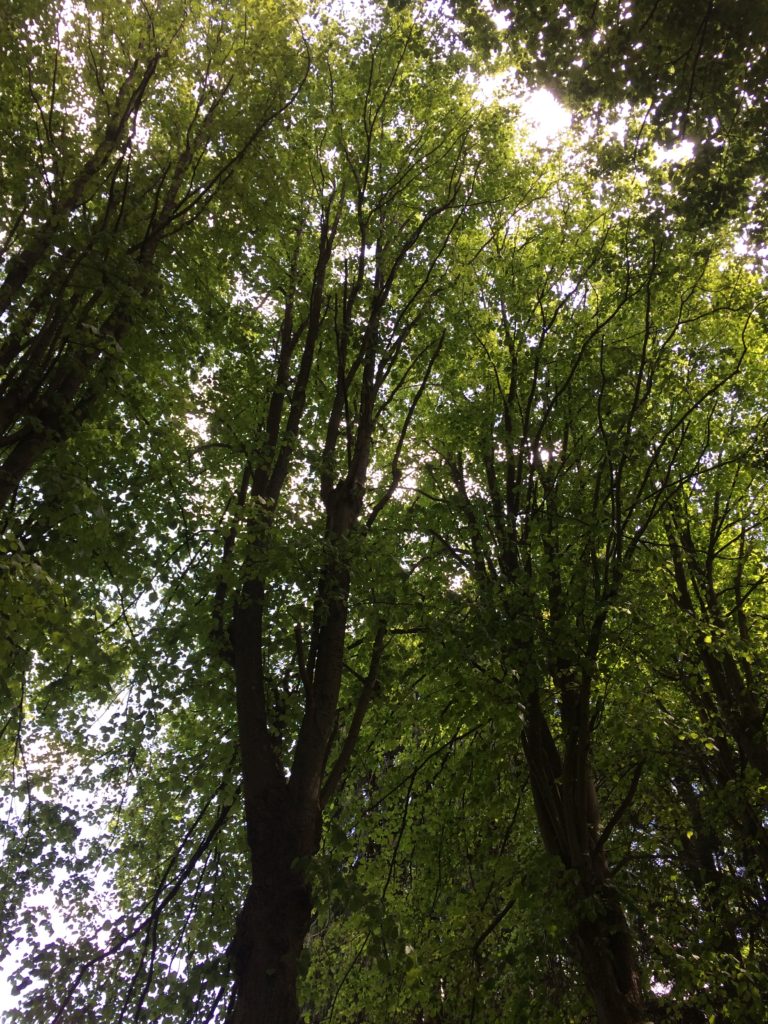
I love seeing the light from the canopy close over and the long thin strips from beech (Fagus sylvatica) buds drifting to the ground, as it signals to me that two weeks of incredible foraging is about to start. Whilst the beech leaves are incredibly soft and their edges are still slightly downy you can eat these leaves as they are. They’ve got a delicate, slightly sweet flavour, that makes an excellent base for a wild salad. Often in my house served with a sprinkling of wild-flower-power petals on top, including dandelions (Taraxacum sp.), primroses (Primula vulgaris), sweet violets (Alliara riviniana), hawthorn (Crataegus monogyna) blossom and white dead nettle (Lamium album). One of the many joys of the beech leaf and leaf harvests in general is the sheer volume that you can collect without making a significant impact on each individual tree.
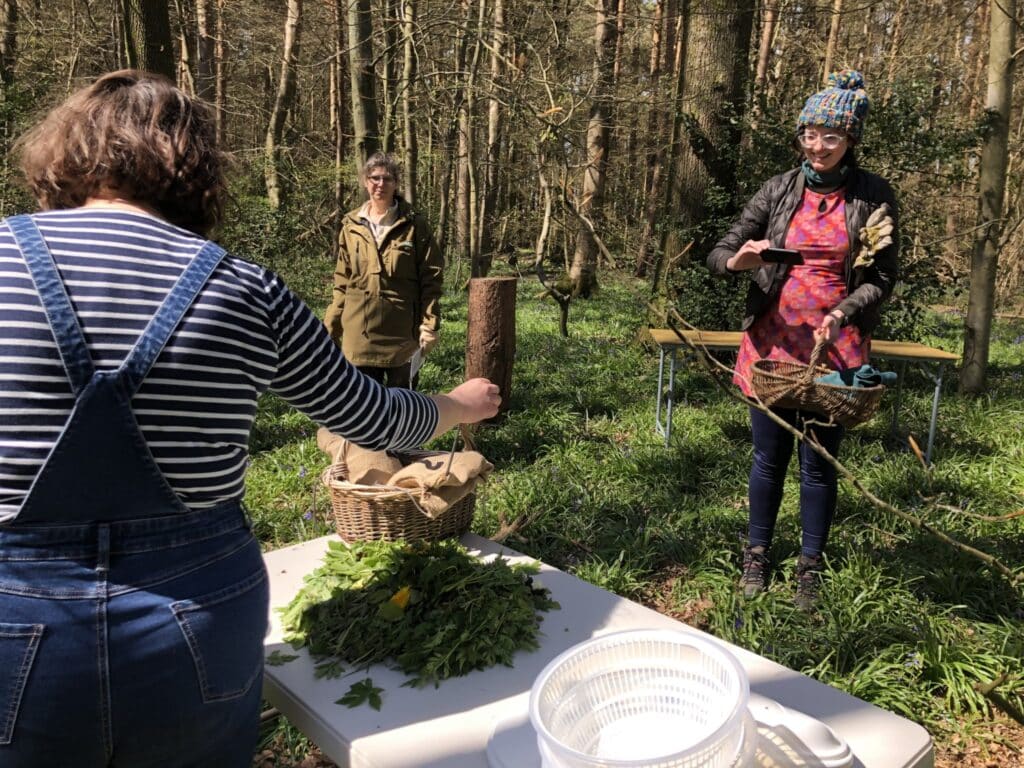
Whilst foraging on our courses we talk about the rule of a 1/7th but as this can be misinterpreted and sometimes leads to a lot of number crunching. I tend to encourage people to pick in a way that if an observant interested walker was to come by just after you’ve left, they would not notice that you had been there. Of course, the next forager is likely to spot a few missing growing tips of some plants and other signs, but the casual observer should not be able to see your foraging progress.
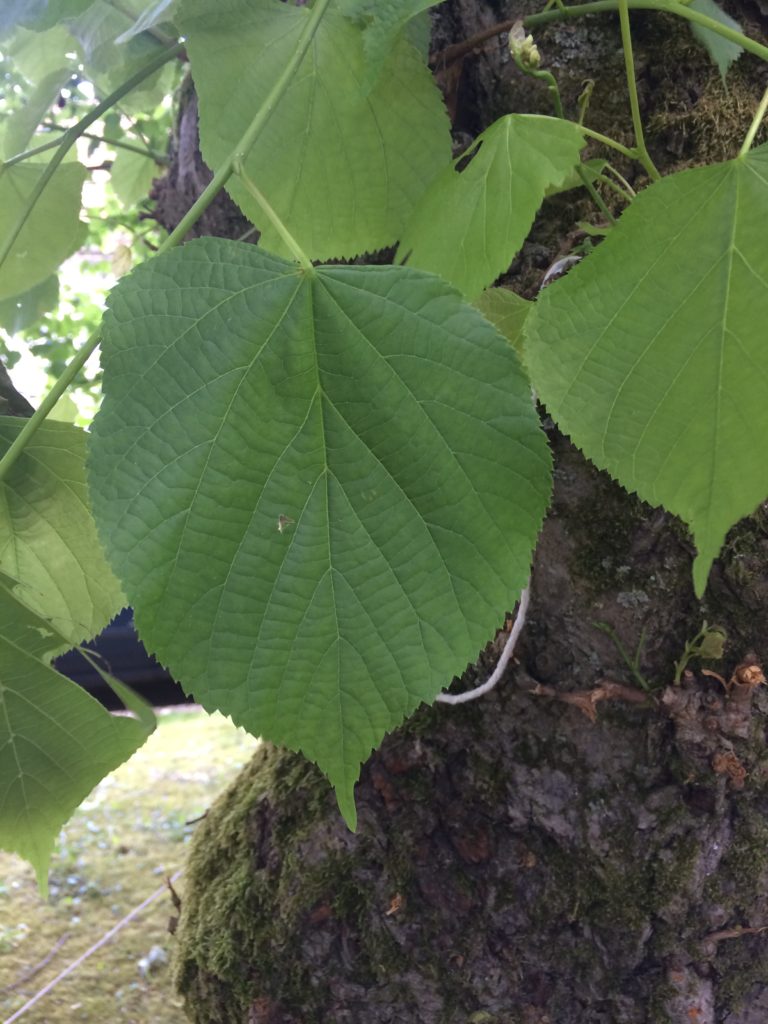
After the beech leaf extravaganza is nearing its end, don’t worry the lime (Tilia sp) leaves are on their way. Lime is a wonderful tree, if any of you have done any cordage work you will most likely have come across the joys of working with the inner bark of the lime tree. Again, you get about two weeks where these leaves are at their best and can be used shredded or cut into strips in a salad.
Later in the year the lime leaves, stop being soft enough for salads my favourite recipe for them is lime leaf dolmades. You can read this recipe here.
Once the leaves are fully out it’s the perfect time to coppice the lime for its inner bark, or bast. The sap has risen, which means that stripping the bark and inner bark from the tree is a much easier job. Though still one that will get your heart rate up and muscles aching the next day. Bundle the stripped bark up and chuck it into a stream or river to ret down, this is a controlled rotting process. You’ll know it’s ready when the layers start to delaminate. The lime bast has many uses now, from coil basketry to cordage and rope making. Any fibres that don’t make the grade make for incredible tinder.
We have honeybees near our woodland and the beekeepers always look out for when the lime trees will flower. They preload the hives with extra supers (sections for the bees to store their pollen and nectar) as the volume of nectar and pollen that these trees produce can be huge.
Observing the order that the leaves bud across a tree or a woodland can also give us information. You will usually find in a woodland that the lower level of trees come into leaf first. This is due to a number of reasons, one being it is warmer in the frost shadow of the larger trees. Did you notice over winter that often the grass under the trees on a lawn or a park didn’t have any frost on when the rest was crispy white? The trees are making the most of this warmth and lower levels of wind and ensuring that they get as much sunlight as possible before they are overshadowed by the taller trees above them.
Looking at a woodland from the edges, the South facing side will tend to come into leaf first, unless there is a strong wind factor on that side. This is the same for a lone tree in a field too. If your eyes are very sharp and perceptive to the colour shifts, you’ll notice that pink tinge, I mentioned earlier, also follows this pattern, as the buds swell in response to the warmth and direct sunlight.
Do get in touch, what are your favourite things to forage at this time of year? Please ensure that you are foraging sustainably and legally and that you are 100% confident on your identification before ingesting anything.
You can read our blog on foraging and the law here.

Spring Foraging Day
£95
Learn to identify and cook seasonal wild foods. Our instructors will take you on a stroll to gather our plants in the afternoon you’ll cook up a delightful celebratory meal.

Autumn Foraging and Preserving Weekend
£195
Learn to identify and forage for a range of wild foods. We will focus on berries and fruits plentiful at this time of year, and how to preserve these for a later date.

Autumn Foraging Day
£95
Learn to identify and cook seasonal wild foods. Our instructors will take you on a stroll to gather our plants in the afternoon you’ll cook up a delightful celebratory meal.