
I am delighted to bring to you this guest blog from Rupert Loch of Feral Science, talking about an incredibly lovely wine infusion I have had the pleasure of drinking with Rupert – this year I will be making some for sure! He co-runs our Wild Alcohol and Foraing Course which is running again this Autumn.
For most of us our introduction to wild or foraged alcohol comes through sloe gin, home made cider or the addition of odd fruit to a batch of beer. If you are lucky your Sloe Gin was not a commercially sweet copy of cough syrup, and the cider did not grow things on its surface; but this is not always the case.
While all of these can be good, they do not really do the ingredients justice. If you are foraging responsibly, you also have a responsibility to use the ingredients responsibly and ideally produce something that is worth drinking and not an obscure duty you impose on visiting friends or around the fire once they have relaxed.
This blog aims to start to tackle the hugely broad subject of infusions, the addition of flavours into spirits or wine. The majority of these can be done simply and many are quick to make, even if the maturation time can take a little longer. For simplicity these may be divided into fruit or foliage infusions. The former fruits include, but are not limited to; bramble, plums including damsons, bullaces and sloes, raspberries, wild strawberries and other hedgerow fruit. The first essential piece of knowledge is that you must be certain that you are able to recognise your fruit and know that it is edible. If you are not sure follow that advice given to all new foragers and check and check again, using a number of different ID sources, go on a course and use the guides that are available as a backup.
Spirits that may be used include the obvious gin and vodka but do not overlook rum or whisky which work equally well and are able to produce their own magnificent pairings. Bramble Whisky may sound wrong to a purist, but works brilliantly with the dark fruit, matching especially well to a slightly smokey whisky. Wines and cider will also infuse well and are often served warm as ‘mulled’ drinks flavoured with a mixture of spices and orange zest: If these are your thing then you can either purchase ready made ‘tea bags’ or be brave and produce your own secret blend.
-

Wild Alcohol & Foraging Workshop
£55.00 – £495.00Price range: £55.00 through £495.00 Select options This product has multiple variants. The options may be chosen on the product page
Less well known are wine infusions, perhaps partly because the UK has historically focussed on beer because of our climate. If we look to Europe though there are many more options; red, white, or fortified.
One of the easiest ones of these to make is the French Aperitif Trouspinette (or Epine) from the Vendee region of the Loire. There are both red and white versions of this wine drink, each is flavoured with different foliage and both of which are beginning to burst now.
The flavours from leaves vary depending on the time of year, or the freshness of the growth. You are probably familiar with nettle leaves which are delicious and nutritious early in the season but later become tough and coarse flavoured. The same happens to most edible leaves, particularly those from trees, lime (Tilia) and beech (Fagus), being good examples and also ones that can make alcoholic infusions later in the year.
The blackthorn buds from the base of their thorns early in the year, long before many wild edibles are out. Young blackthorn (Prunus spinosa) leaves are traditionally used with red and white wine. The recipes below for Trouspinette are adapted from traditional recipes, though there is no real consensus on how it is made as each family has their own version. The resulting wines are relatively alcoholic (14-16%) and have a slight sweetness to balance the bitterness that comes from the leaves. The white has a herbal nose with hints of almond over aromas of grape, melon and orange zest, a rich mouthfeel and slight sweetness on the finish. The red is more robust with red berries, some herbal notes, and a hint of almond, finishing rich and almost port-like in the mouth.
For those who are aware of the link between the almond flavour that comes from the leaves of all prunus species and the toxic gas Hydrogen Cyanide, some reassurance; the chemicals in the leaves are cyanogenic glycosides which are not in themselves toxic. This chemical releases Hydrogen Cyanide only as a result of enzyme activity, usually as a result of leaves being crushed while eaten by herbivores or during the processing of nuts or kernels. The selection of early season foliage (buds) and the lack of aggressive processing both help to keep the levels of cyanogenic glycosides low in the resulting wines (1). Heating the wine mix (more details below) in a similar way to the traditional french berry liqueurs will further reduce the ability of the foliage to produce cyanide (2).
Making Trouspinette does not require a great deal of equipment, but the infusion does take a little time. About 3 months for the red and a little less for the white. The principles are similar.
Foraged Wine Infusions – Trouspinette
Ingredients
- 2 Bottles Wine (Red or White)
- 1/2 Bottle Brandy / Neutral Sprit
- 2-300 Grams Sugar
- 2-300 Grams Young Blackthorn Leaves Prunus spinosa
Instructions
- Simplest option - Put all of the ingredients together in a large glass container (plastic will impart a flavour due to the slightly raised alcohol levels) and try to ensure that there is no air gap (adjust your proportions slightly if necessary).
- Alternatively - If you are concerned about the link to cyanide, then bring the wine to a simmer, add the leaves, and remove from heat.
- Allow the mixture to cool before adding the brandy or neutral spirit, the sugar will dissolve easily in the warm wine. Allow to cool before bottling. Into a large glass container. Try to ensure that there is no air gap (adjust your proportions slightly if necessary).
- Allow the mix to infuse in a cool dark place, not a fridge as this will slow the rate of infusion, for anything between two weeks to 3 months. During this time, the container should be rolled to re-submerge any leaves at the top on a weekly basis, otherwise mould may form. The heat infused wine will require less time and may be ready after a week.
- Once you have decided that the flavour is strong enough, drain the wine from the leaves without crushing them (or it will become bitter) and bottle into glass.
- The wine will continue to improve in the bottle for some time. Open bottles are protected by the raised levels of alcohol and so do not spoil quickly.
Notes
(1). Potential Toxic Levels of Cyanide in Almonds (Prunus amygdalus), Apricot Kernels (Prunus armeniaca), and Almond Syrup
Nadia Chaouali, Ines Gana, Amira Dorra, Fathia Khelifi, Anouer Nouioui, Wafa Masri, Ines Belwaer, Hayet Ghorbel, Abderazzek Hedhili
September 2013 https://doi.org/10.1155/2013/610648
(2). https://www.mpi.govt.nz/dmsdocument/25688-Cyanogenic-Glycosides-Information-sheet
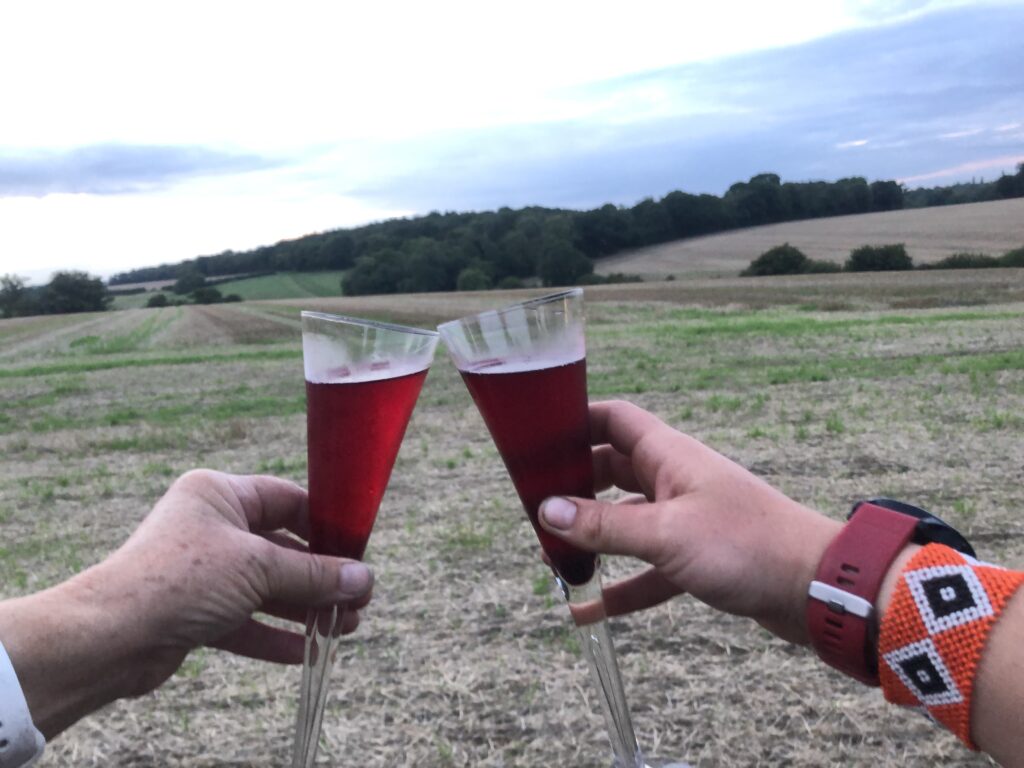
Wild Alcohol & Foraging Workshop
From £395
Our expert instructors will guide you through various brewing techniques, harnessing the richness of the wild harvest. Over three dynamic days, you’ll craft a diverse array of beverages and understand the science involved too.
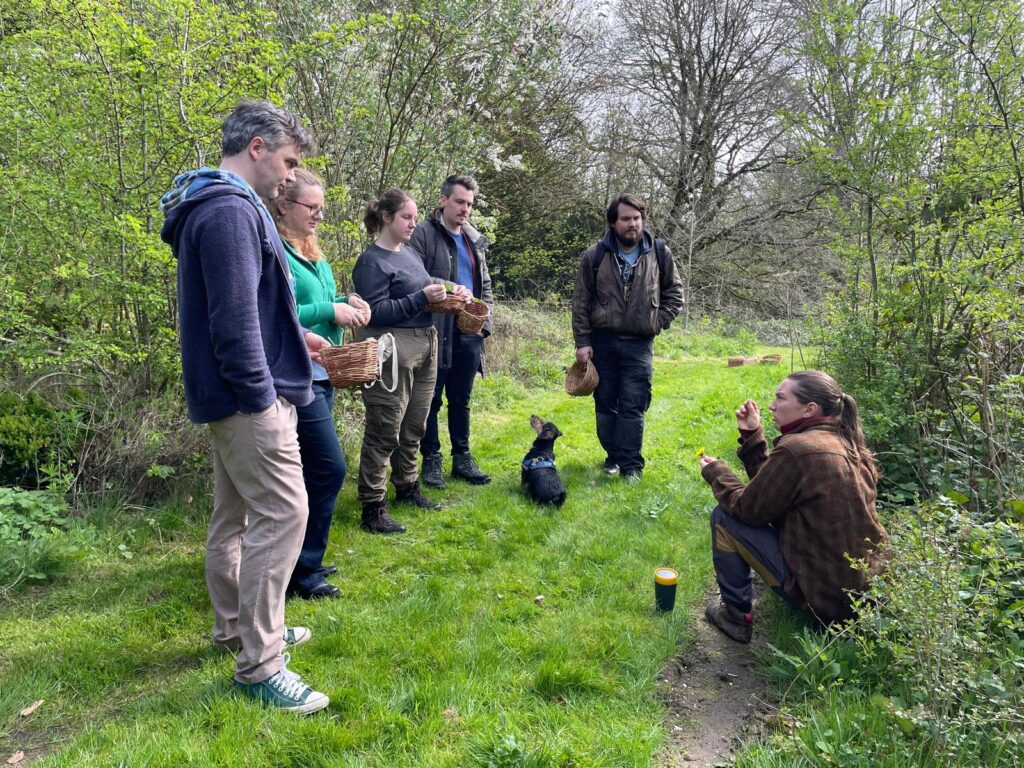
Spring Foraging Day
£110
Learn to identify and cook seasonal wild foods. Our instructors will take you on a stroll to gather our plants in the afternoon you’ll cook up a delightful celebratory meal.

Autumn Foraging and Preserving Weekend
£225
Learn to identify and forage for a range of wild foods. We will focus on berries and fruits plentiful at this time of year, and how to preserve these for a later date.