

I had always been lead to believe there was a dark art to the making of pasta, and this recipe convinced me otherwise. I’m sure that any Italian would scorn the green strands that this recipe creates. However I spent two years of my childhood eating only pasta for tea (apologies Mum), and this passed my muster.
For this activity you’ll need:
For the pasta:
- A patch of nettles growing away from contaminates
- Some plain white flour
- An egg or the liquid drained off a chickpea tin reduced (boiled) to half its volume
- A food blender and a food mixer make this a much faster process but are not essential
- A rolling pin is.
For the Pesto:
- A patch of jack by the hedge (wild garlic or three cornered leek or little flowered leek will all work too – wild garlic will give a much more intense flavour), also growing away from contaminates.
- Olive oil
- Cashew nuts or pine nuts or both (I used a mix)
- Parmesan (optional)
- A blender will really speed this up, but chopping finely works too.

To Start:

Collect the top two or four leaves off the nettles (wear gloves). Make sure you pick nettles before they go to flower. It’s a general rule of thumb that most leaves turn more bitter after the plant flowers. I half filled a carrier bag which was enough for four hungry adults.
Collect the younger looking leaves off the jack by the hedge, again I try to avoid the flowering ones here too, although it wasn’t always possible. I only had about a scooped paired handful of this and it made more than we could eat.
As you pick, shake off any resident caterpillars, leaving them nearby.
Leave your pickings outside for a short while before bringing them in, allowing any missed residents a chance to wander off.
Back inside, rinse off the jack by the hedge and leave to one side.
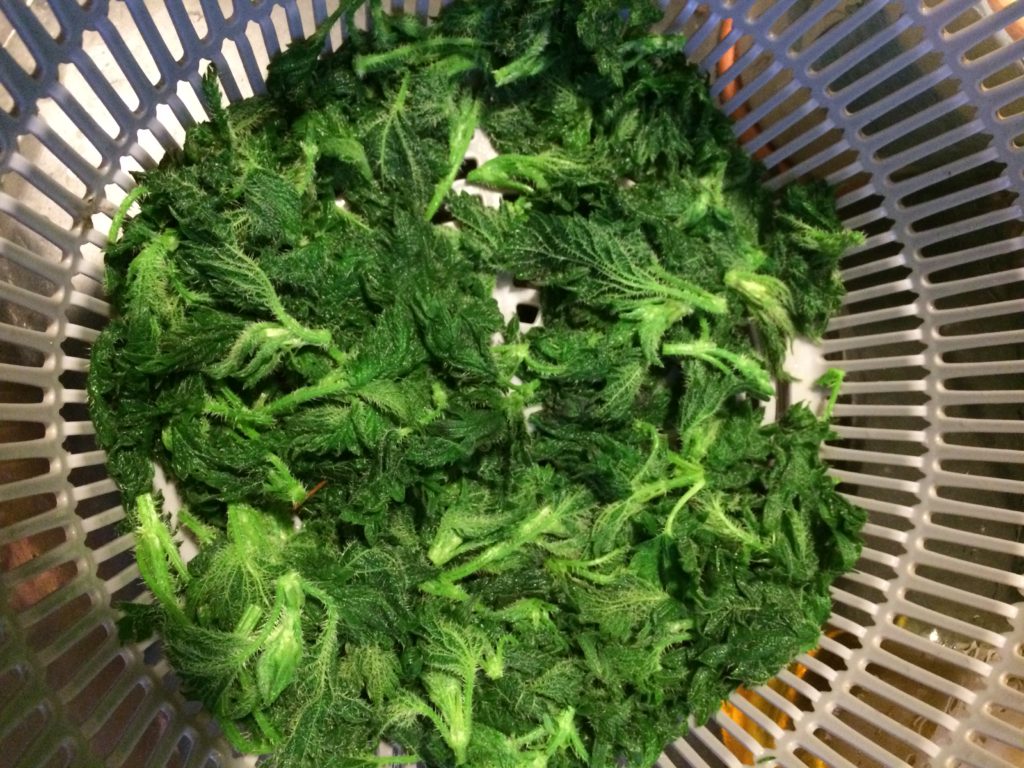
Pour boiling water over the nettles, rinse off, and they are now safe to touch. The volume will have reduced hugely too.
Roughly dry them, I used a salad spinner for this, a tea towel works too.
Place into a blender, or chop finely.
Mix in about the same volume again of flour, then add the egg, or the chickpea water.
Mix this together, you’re aiming for a dough that doesn’t stick to your hands but forms a nice ball. If it’s too wet add more flour, if it’s too dry a little water should do.

Once you’ve got your dough it’s time to take it out, place onto a floured surface and kneed for five minutes.
Rub a little oil into the surface of the ball, and leave in the fridge for at least 30 minutes. I left mine for a few hours and it was fine.
Now time to think about the pesto.
Put the jack by the hedge into the blender, pulverise, add oil, pine and/or cashew nuts, and parmesan if you are using it. And mix. I needed more oil than I reckoned for to give it the right consistency, and added more pine nuts as it was a little bitter. I stated on about a 2:1 ratio of green and nuts, then added more oil until I was happy with the consistency. I added parmesan at the plate as some of my housemates are vegan.
Once you’re happy with your pesto, give yourself a pat on the back and put it in the fridge.
Back to the pasta.
Clear and dust a large work surface with flour.
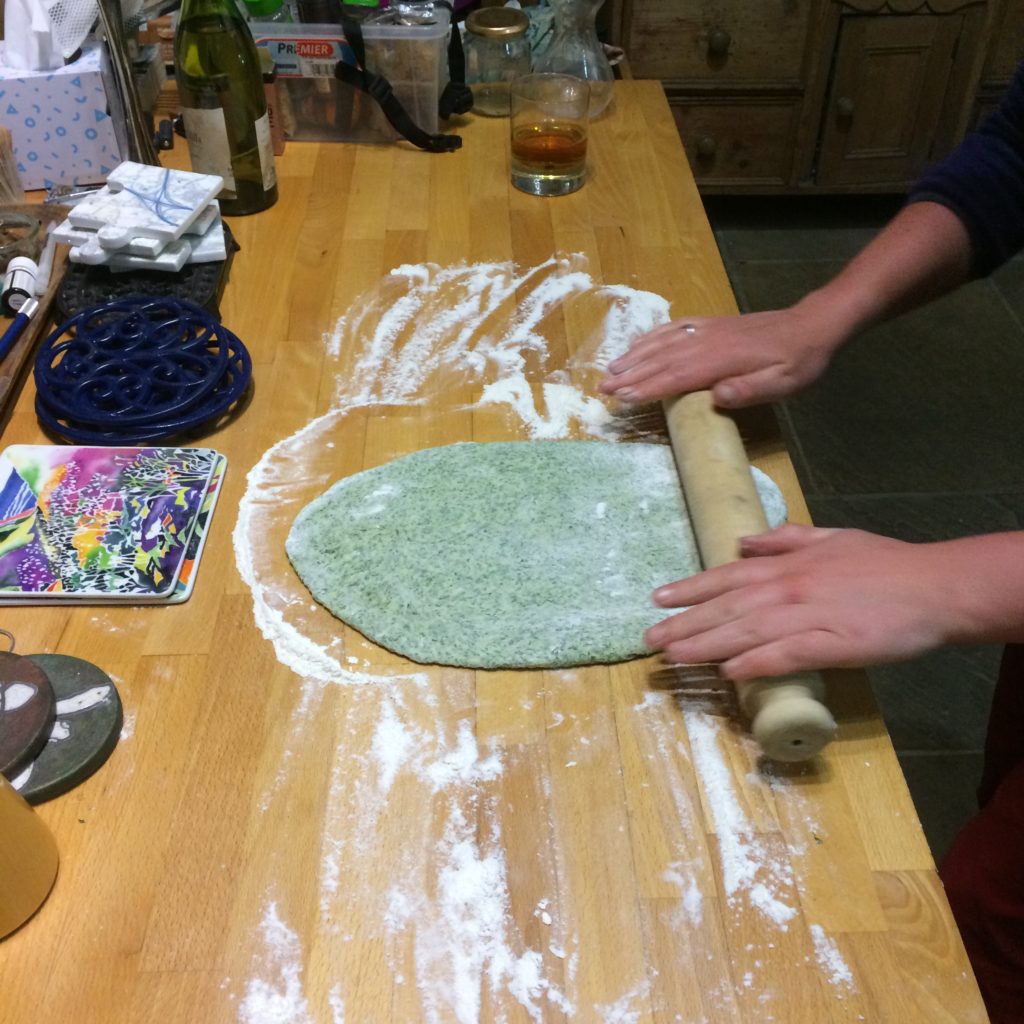
Get the pasta out the fridge and roll it out, and fold it back in again. I did this rolling it out to about the size of a pizza before folding it back on itself about five times.
Then it’s time to roll it out proper.
It won’t do much in terms of flattening for a while, but then suddenly your hard work pays off and it starts to flatten, and look like a giant weird shaped pizza.
I rolled it as thin as I thought I could (about the thickness of a 10p piece) without it feeling like it would tear as I picked it up and de-stuck it.
I didn’t worry about making it an even size, or shape. And I followed this through when cutting it too.
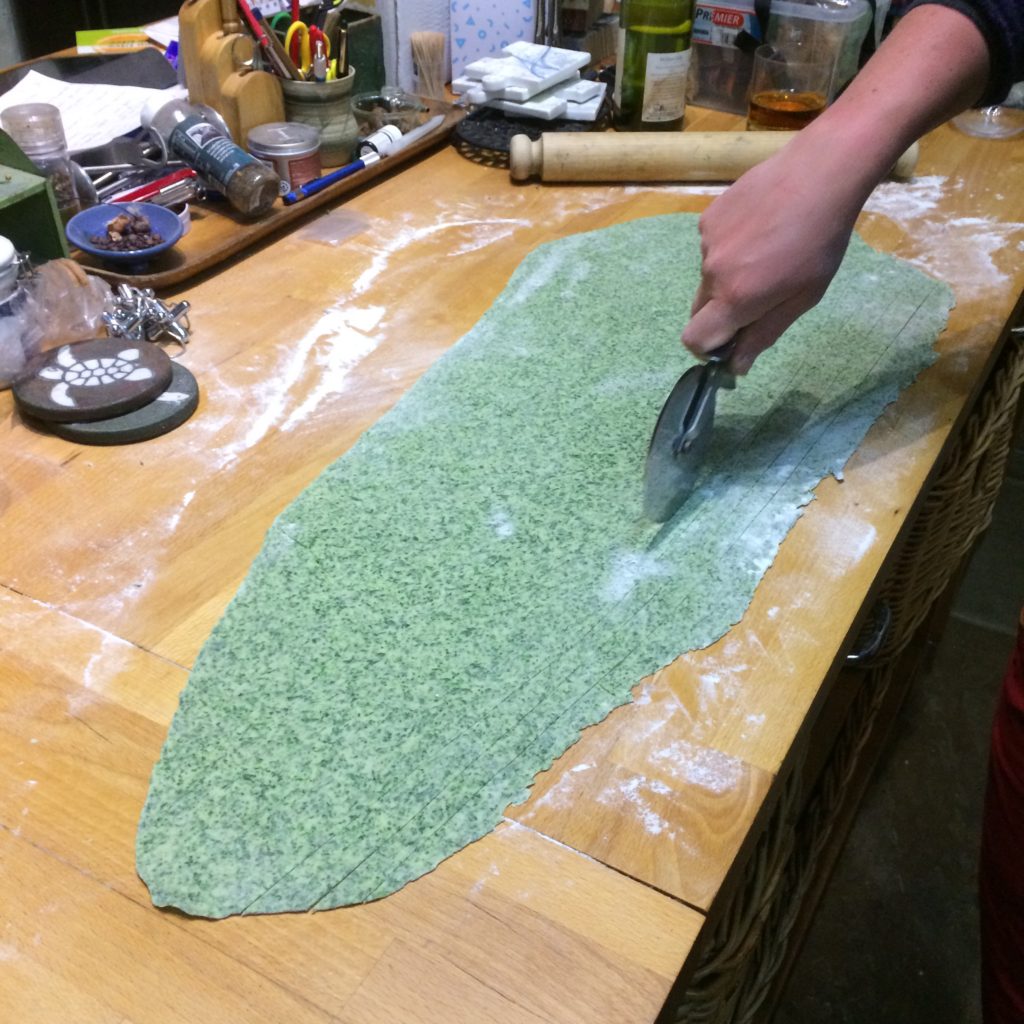
I found the pizza cutter worked well to cut it, and as it doesn’t slide the sharp edge along the workshop, used gently, I didn’t cause any damage to the surface either.
Put a large pan of water onto boil, and get everyone in the room, fresh pasta doesn’t take very long to cook.

Pull the bits that haven’t cut fully apart, and lift your pasta pile into the pan when it has a rolling boil.
I made my pasta lengths almost a metre long, I’d suggest cross cutting these, it will be much easier to eat!
Taste test the pasta, strain when it’s done, mix in the pesto and enjoy.
-
 Foraging Course – Gift Voucher£110.00
 -
 Basket Weaving Course – Gift Voucher£110.00