Crab apple
Malus silvestrus
Edible Parts:
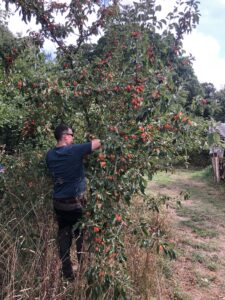
Crab Apples
Height: 14m
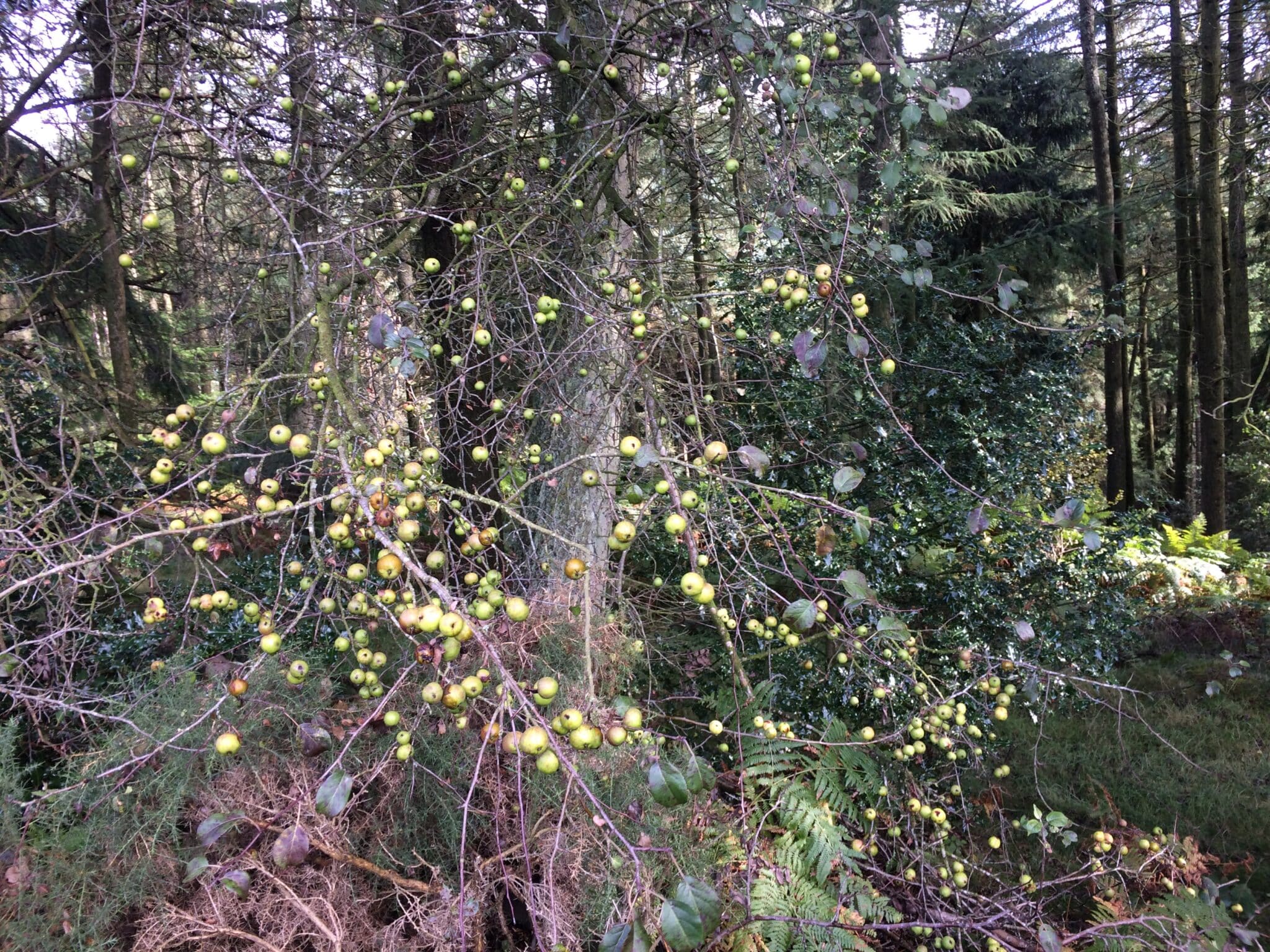
Habitat: Native to the UK, and most of Europe and Türkiye. Found in Woodland Pasture & Ancient Woodland
Family:
Rosaceae (Rose)
Harvesting Seasons:
Autumn – September – October
Crab apple
Malus silvestrus
Edible Parts: Crab Appples
Height: up to 14m
Habitat:
Native to the UK, and most of Europe and Türkiye. Found in Woodland Pasture & Ancient Woodland
Family:
Rosaceae (Rose)
Harvesting Season: Autumn – September – October
ID features:
The crab apple often still has spine tipped twigs, making it in winter somewhat confusing against a blackthorn, plums and greengages.
It is widespread throughout the British Isles, though rarer in Northern Scotland and Western and Central Ireland.
Crab apples are predominantly hairless on their leaves and leaf stalks. Young twigs may be slightly hairy but as they age, they are also hairless. The flower stalks and outer of the calyx (the bud casing) are also hairless.
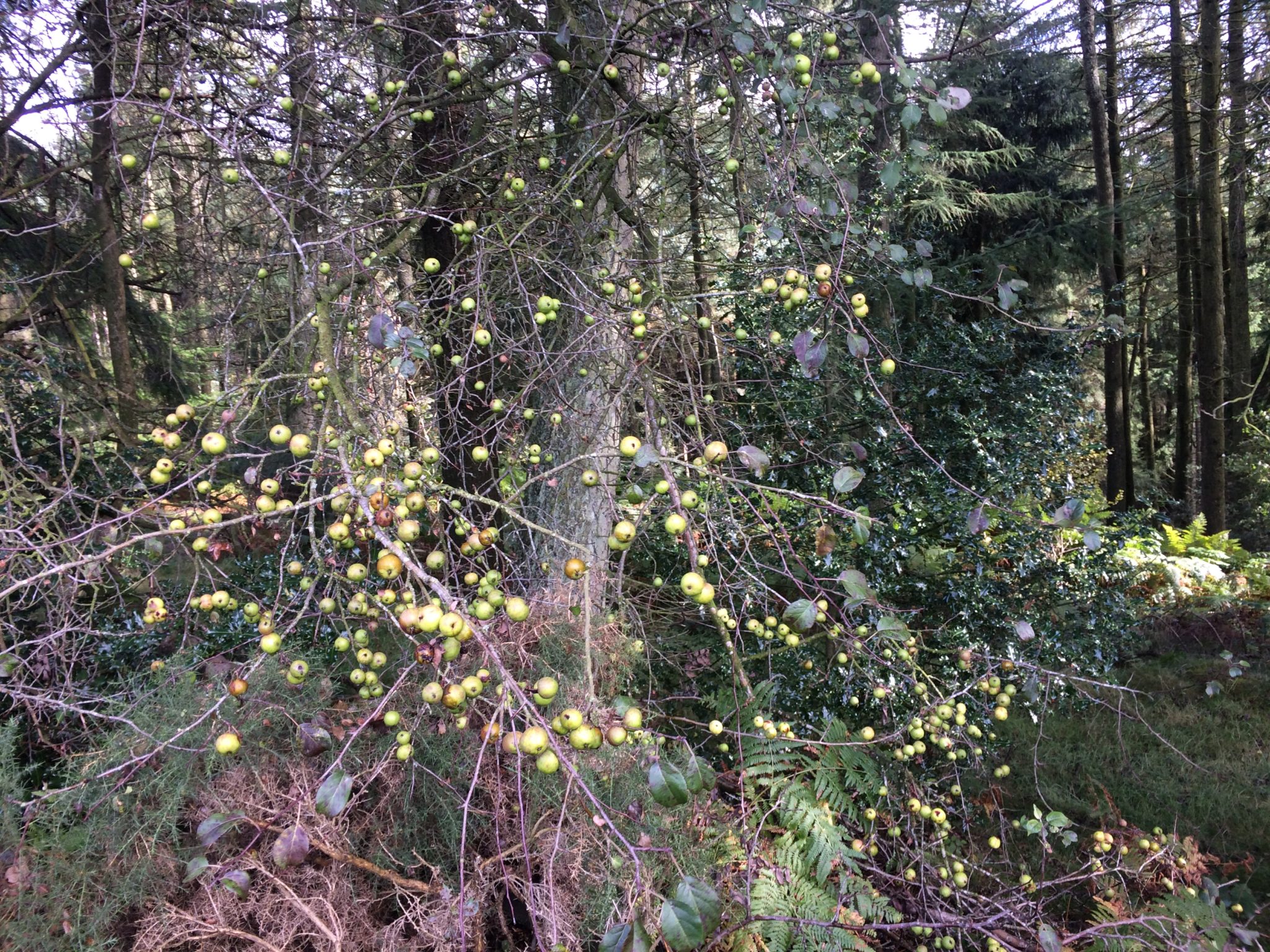
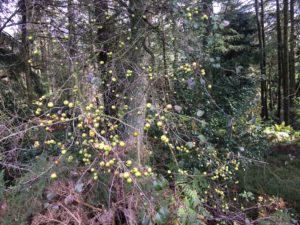
The crab apple has a dense tangled canopy, with irregular dark grey bark.
Its leaves are small growing 3-5cm and a maximum of 7cm long. The leaves tend to be stiffer than its domesticated cousin.
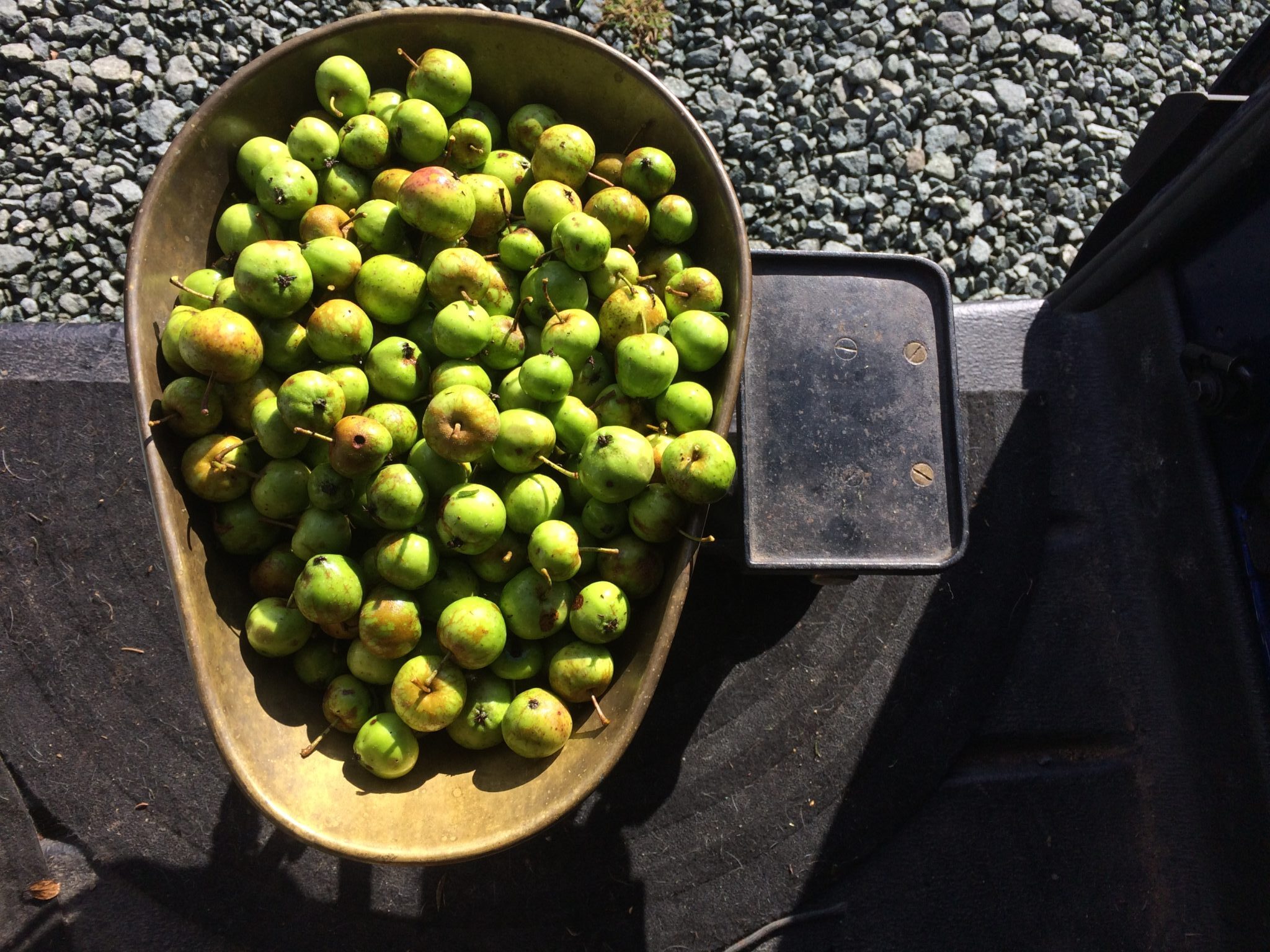
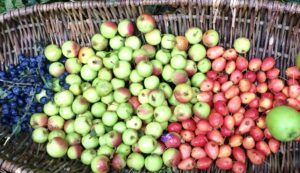
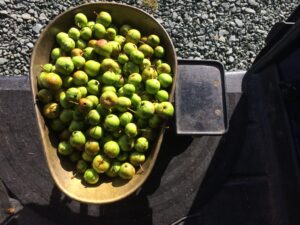
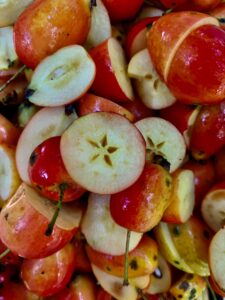
Crab apple fruits are small and very tart, although many wild apples will also be small and tart.
Confusion Species:
The domesticated edible apple Malus domestica. This is a hairy tree – it is hairy on the underside of the leaves, hairy on the leaf and flower stalks as well as the calyx.
The domesticated apple is never spiny, and its leaves are up to 15cm long.
Full separation from the crab apple might be difficult and this is played out by genetic sequencing showing that around a ¼ of the crab apples are actually domestic and crab hybrids.
Uses:
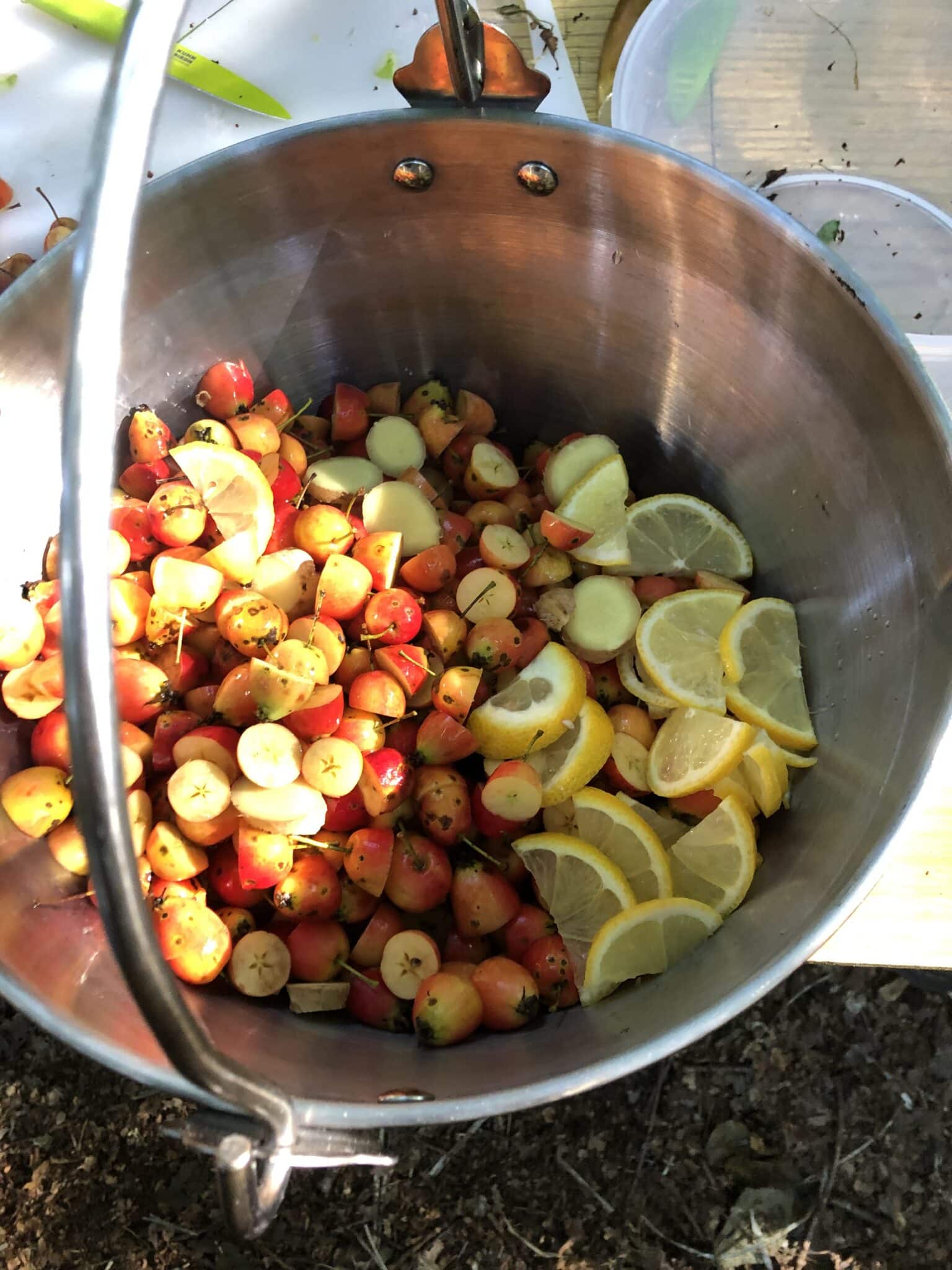
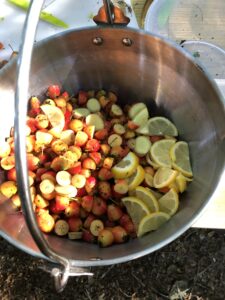
The fruit are generally quite tart but can be used in preserves including fruit jellies, and fruit butters. My favourite recipes for each can be found by clicking through.
The apples are very high in pectin so set well, and can be added to softer fruits to aid their setting
The timber when burnt gives a pleasant fruity smoke, this can be used to good effect when smoking to preserve especially pork.
There are occasional records which show crab apples used in low density coppice system as the standard tree (the one which is not cut on rotation).
Did you know:
The crab apple is native to the UK, and most of Europe and Türkiye. It is widespread throughout the British Isles, though rarer in Norther Scotland and Western and Central Ireland.
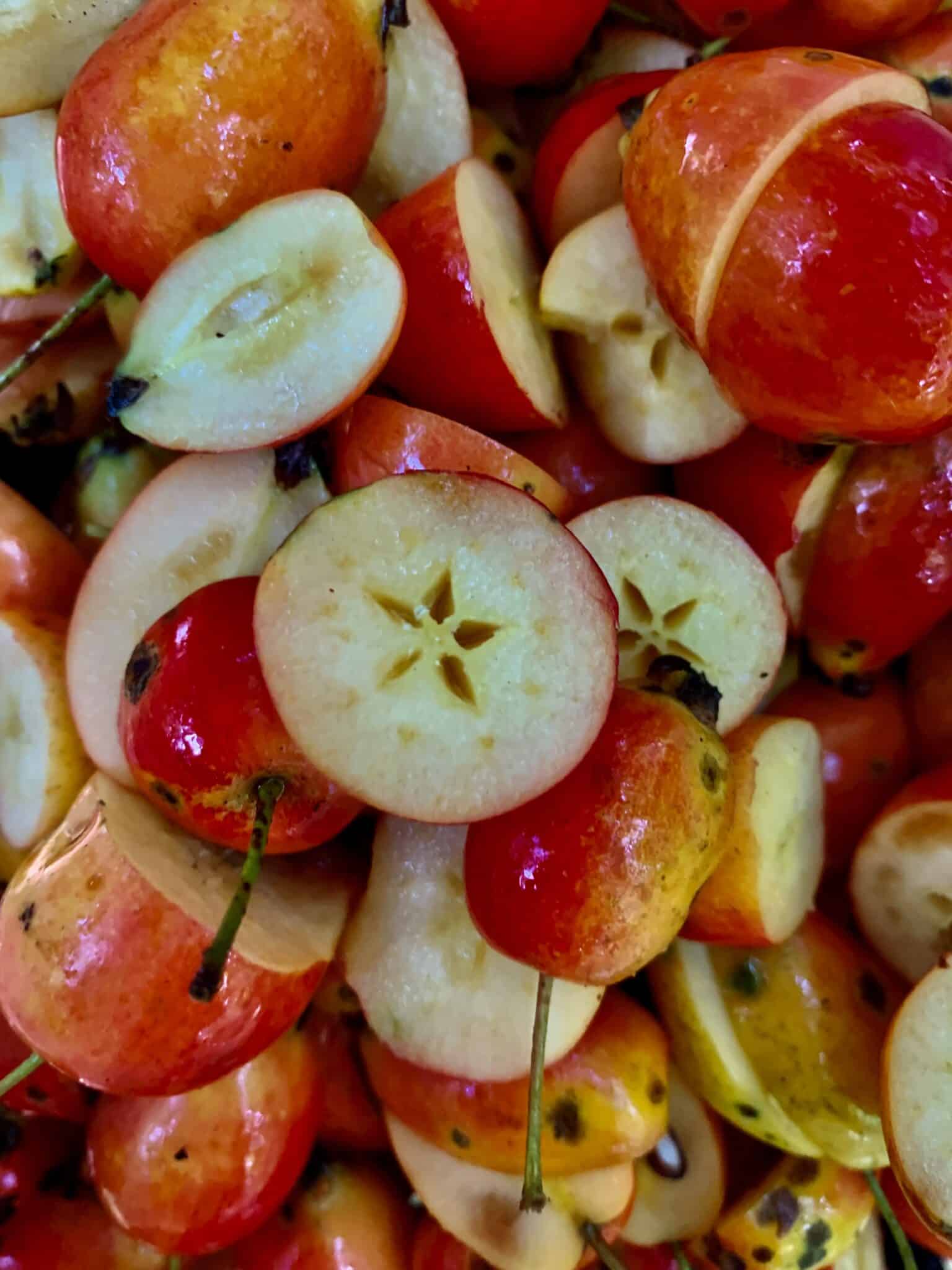
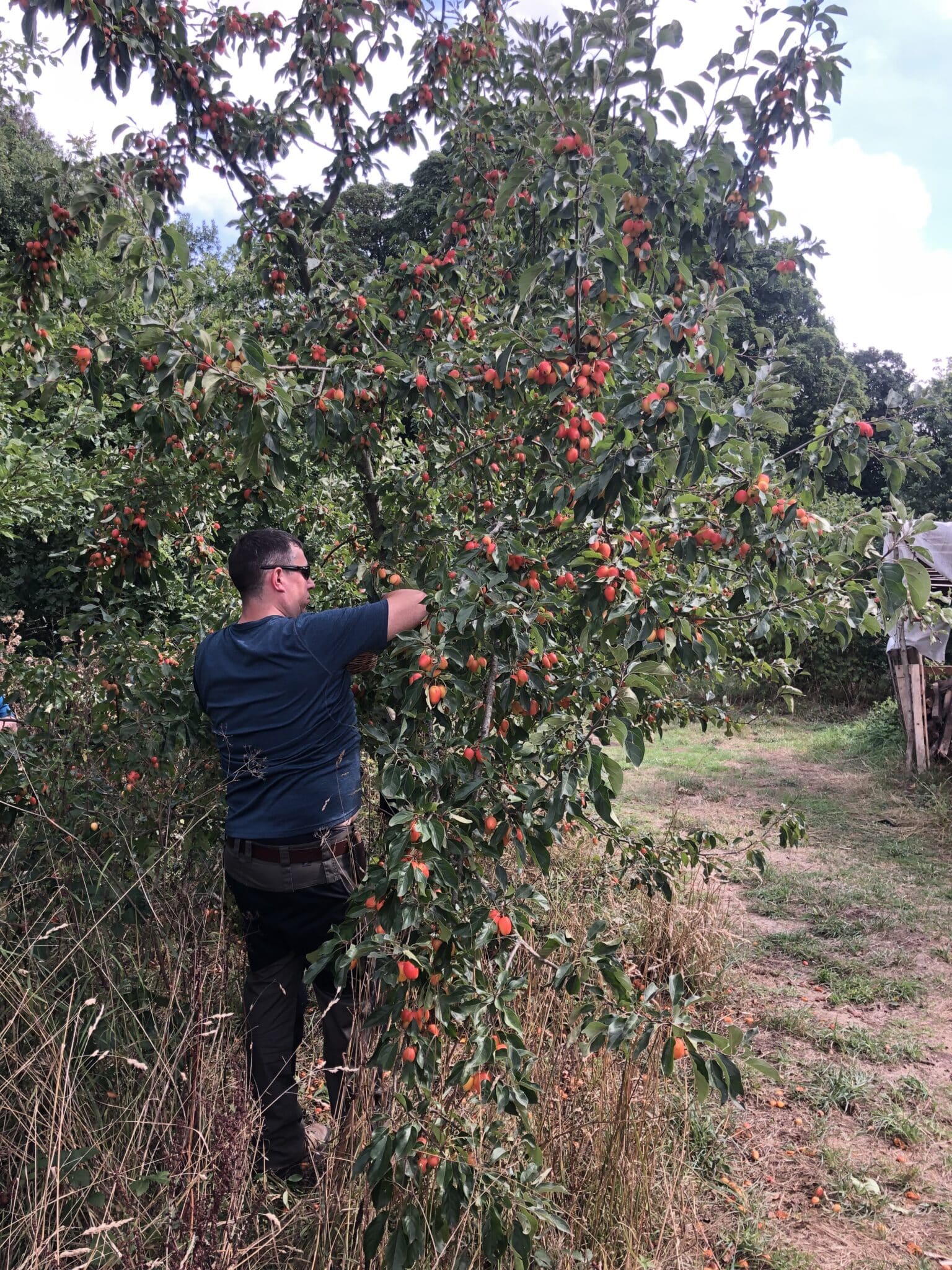
M. Silvestrus, the crab apple has rarely been domesticated for its fruit. The John Downie apple is an exception. It has beautiful, tear-dropped orange and red apples perfect for use in apple jellies, as the red colouring permeates into the jellies.
The domesticated edible apple Malus domestica is native to vast swathes of Eastern Asia; Afghanistan, Kazakhstan, Kyrgyzstan, Pakistan, Tadzhikistan, Uzbekistan, Xinjiang.
The introduction of the domesticated apple came along the trade routes of the Silk Road, reaching Britain some 4,000 miles later.
Apples very rarely self-pollinate, creating vast genetic variation across the species and making the growth of an apple true to its parent apple extremely unlikely.
The seeds of apples are adapted to survive the stomachs of herbivores and other mammals including humans and will happily pass through and grow the next season.