Bluebell (British)
Hyacinthoides non-scripta
Edible Parts: None
Height: 25-50cm
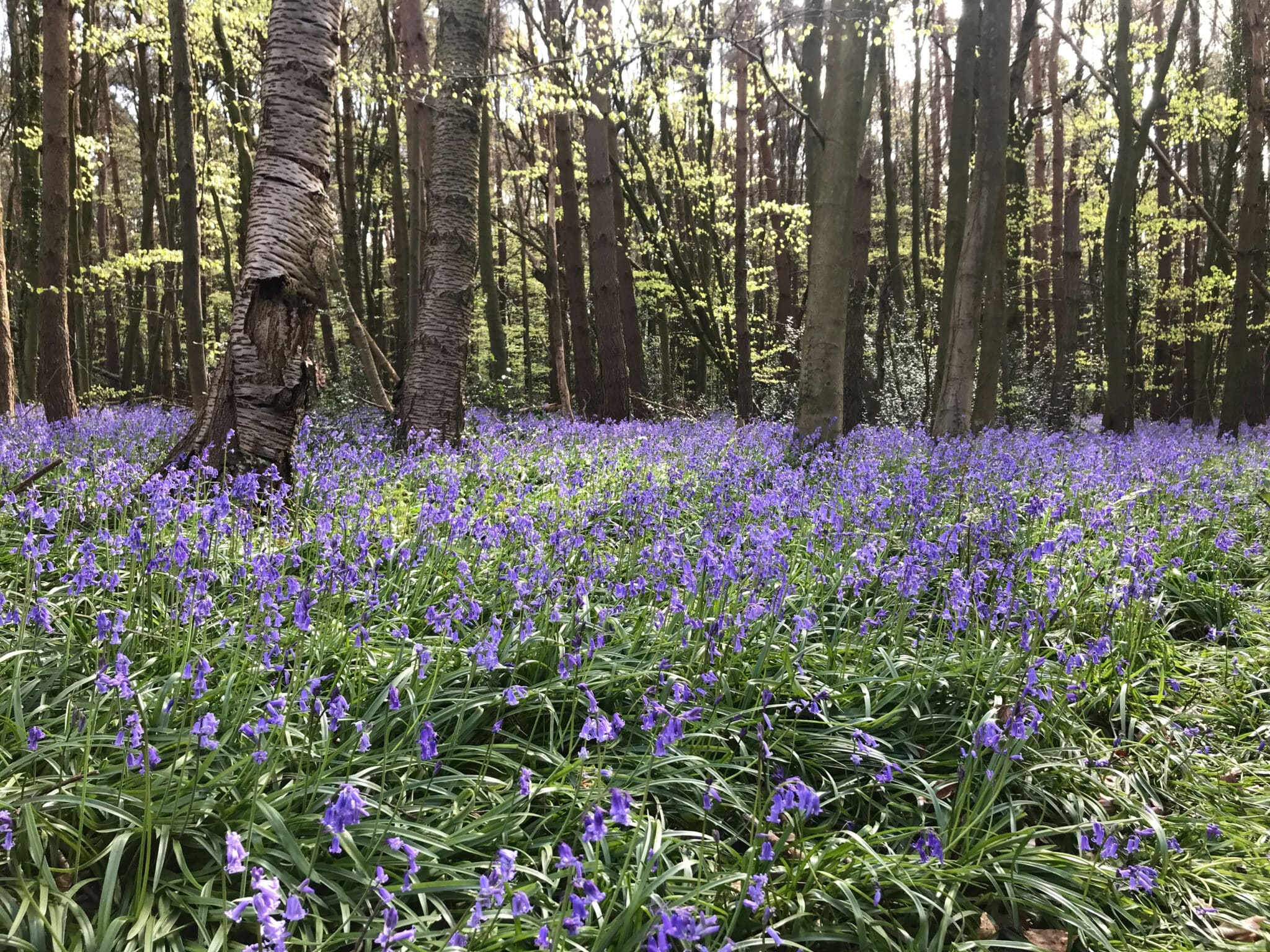
Habitat: Common in woodlands & hedges in Britain, absent from Shetland & Orkney isles.
Family: Lily (Liliaceae)
Flowing Season: May
British Bluebell
Hyacinthoides non-scripta

Edible Parts: None
Height: 25-50cm
Habitat: Common in woodlands & hedges in Britain, absent from Shetland & Orkney isles.
Family: Lily (Liliaceae)
Flowering season: May
ID Features:
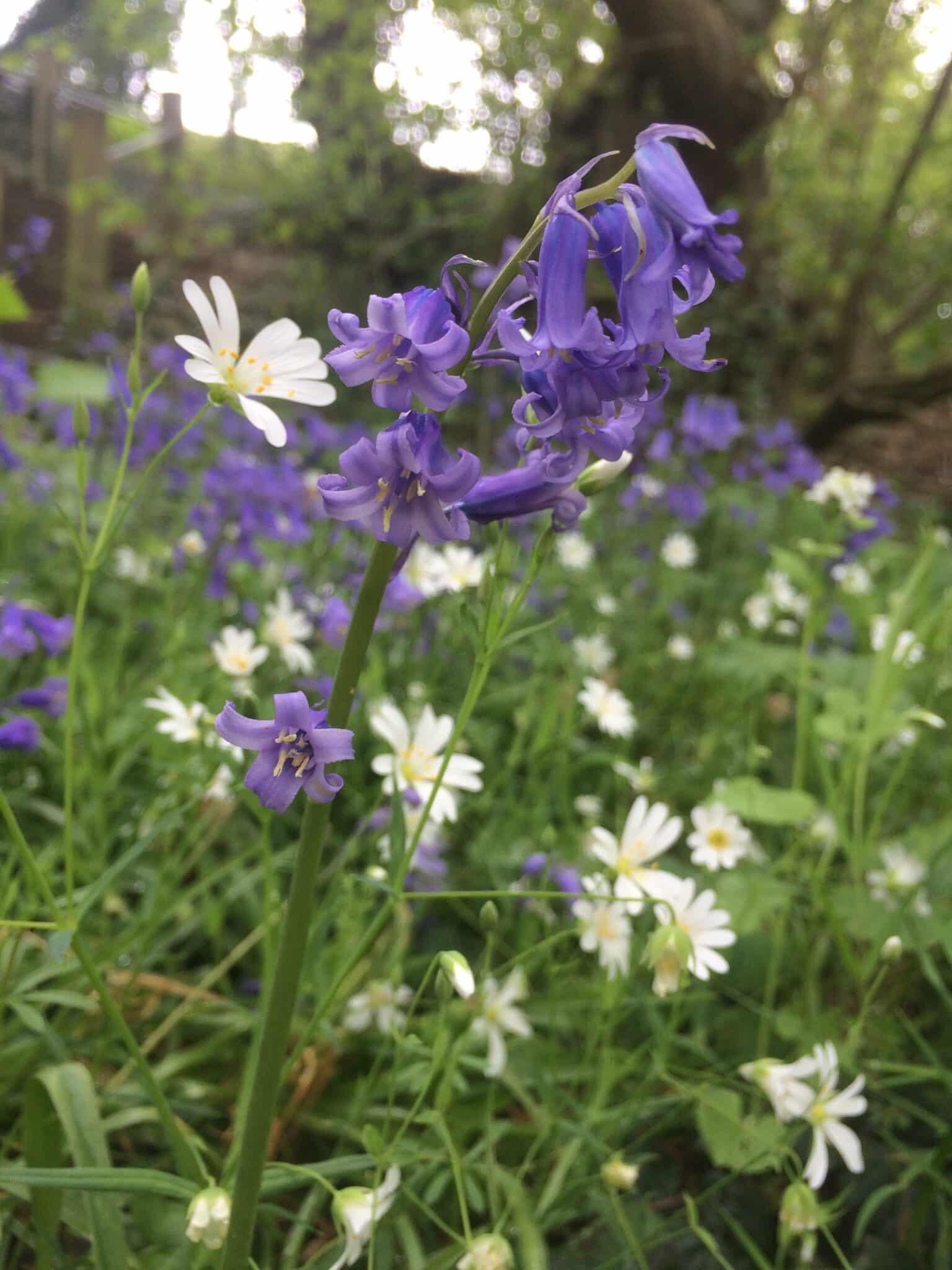
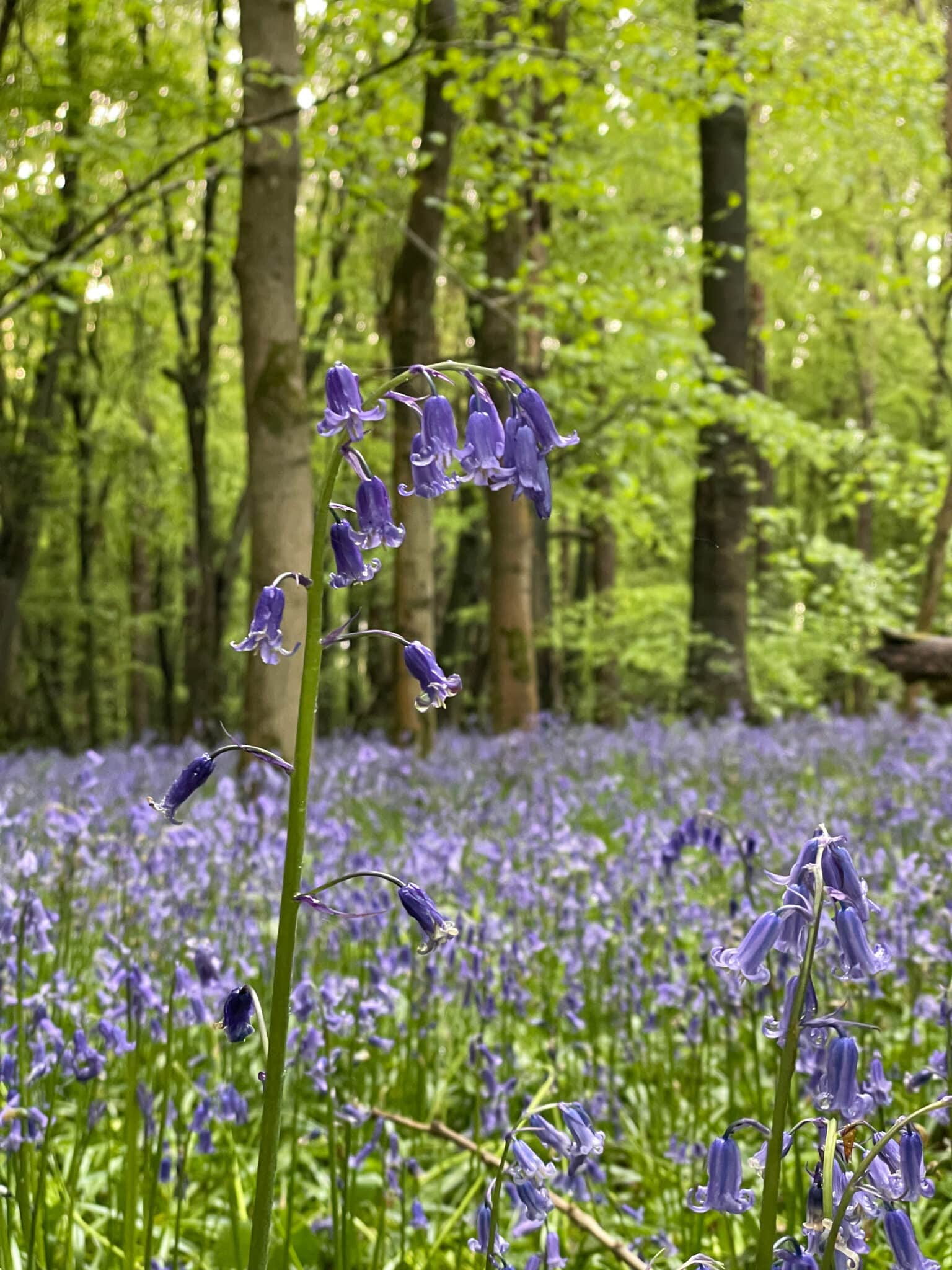
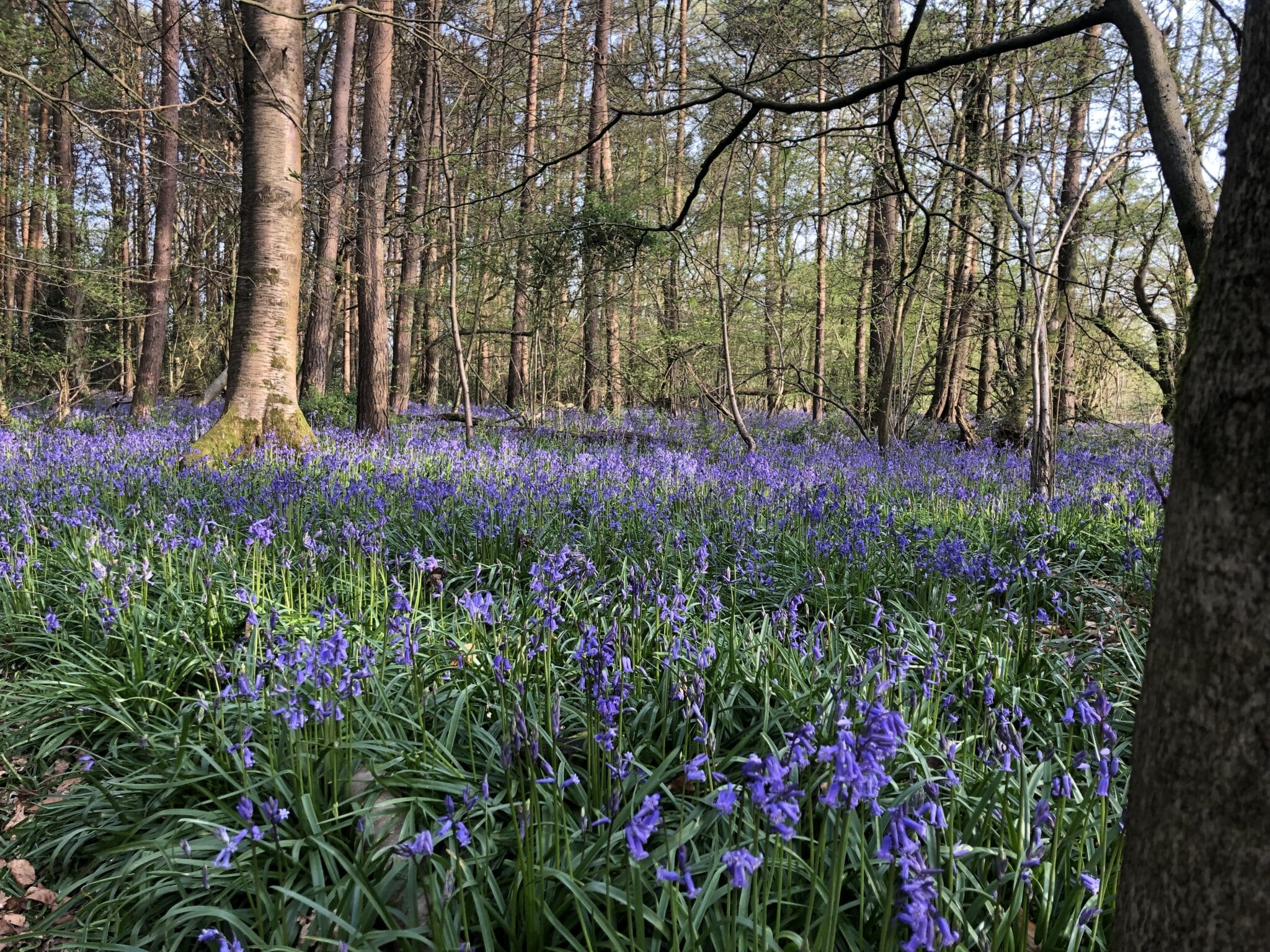
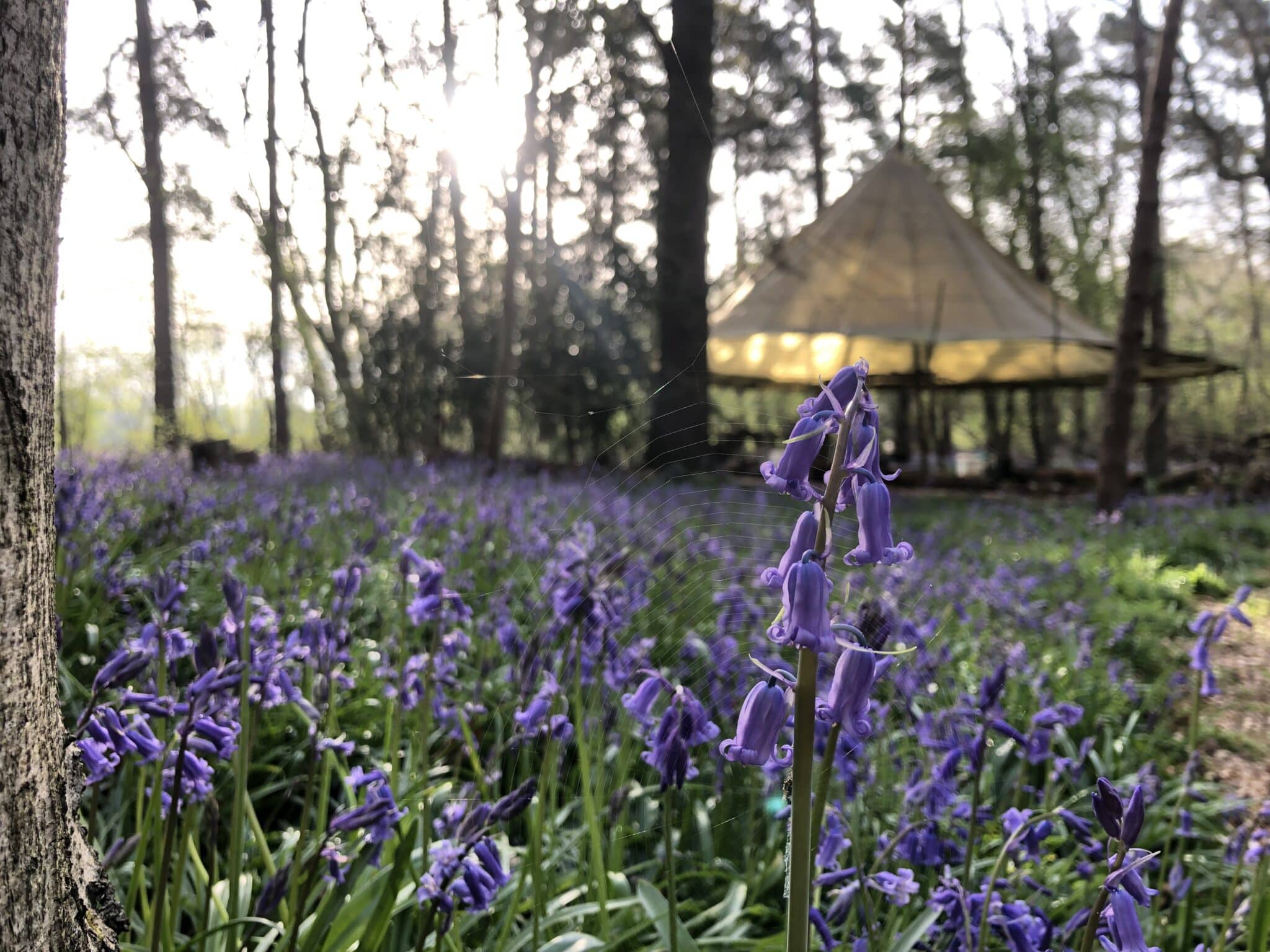
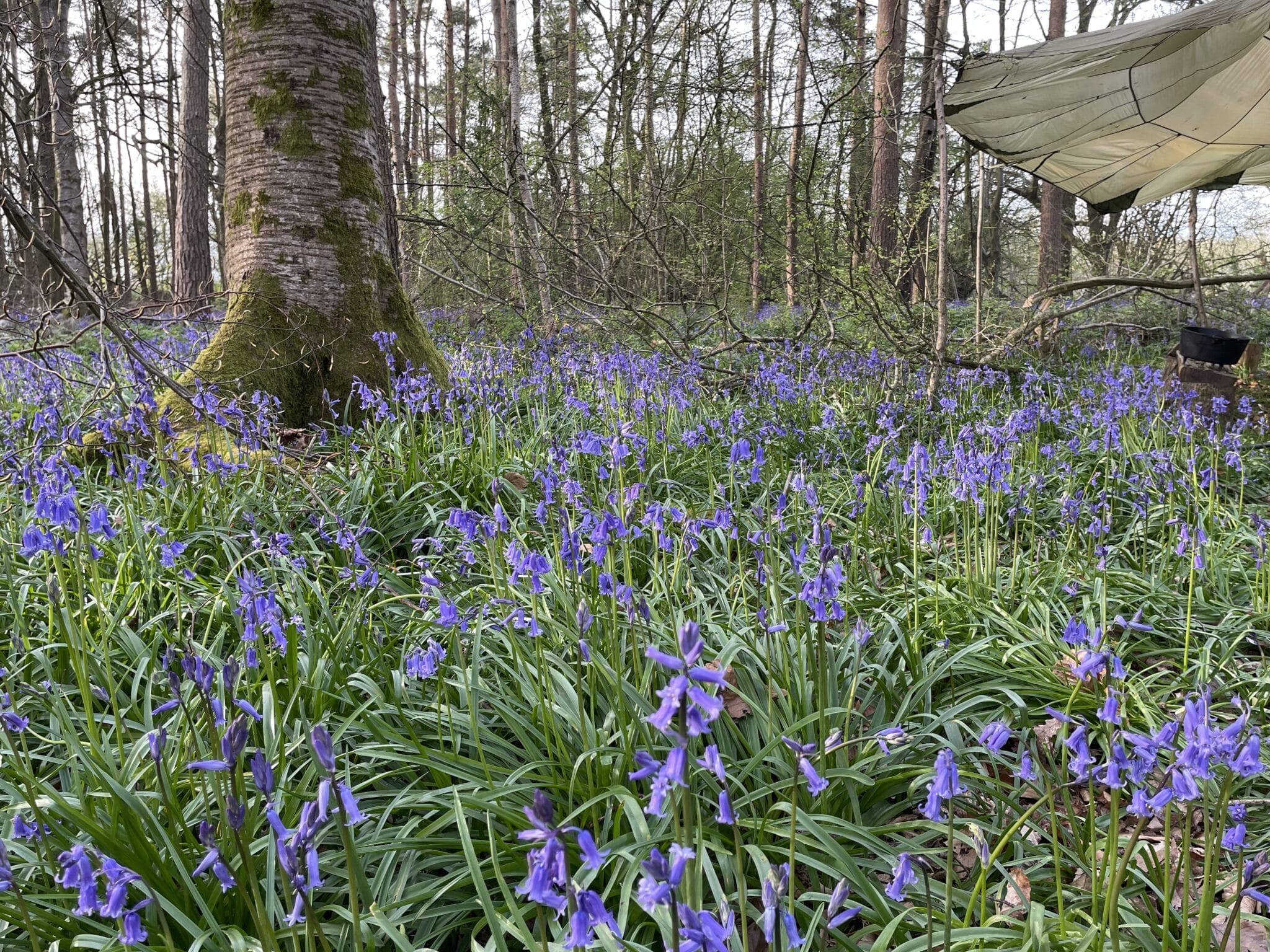
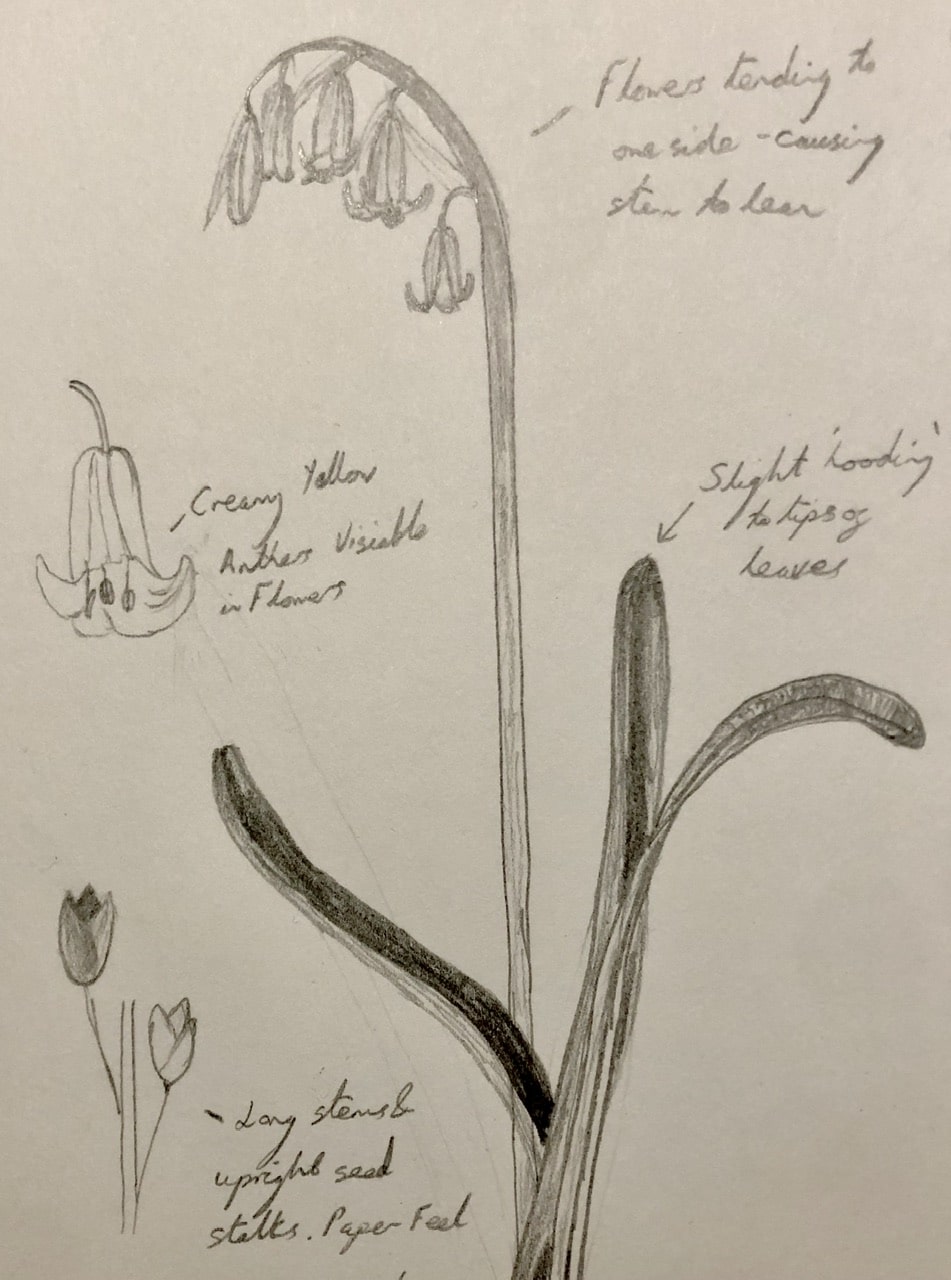
Glossy green 1-2cm wide linear leaves, with parallel veining, and a hooded tip. Flowering stem, taller than leaves and with blue cylindrical bell-shaped flowers on one side of the stem causing the stem to droop to one side. The tips of the petals separate out into 6 and curl backwards. The anthers, the part of the flower containing the pollen-producing stamen, are cream and protrude the end of the tube part of the flower.
Confusion Species:Spanish Bluebell (Hyacinthoides hispanica): A more sturdy bluebell, with flowers all the way around the stem and an upright stem. The anthers are blue and tucked inside the flower. Can be pink or white as well as blue.
Hybrid Bluebell (Hyacinthoides massartiana): A cross between the Spanish and British Bluebell, often found in gardens and sometimes escaped from them. More delicate than the Spanish bluebell, leaves 1-3.5cm wide. Flowers spiraled around the stem and anthers also blue.
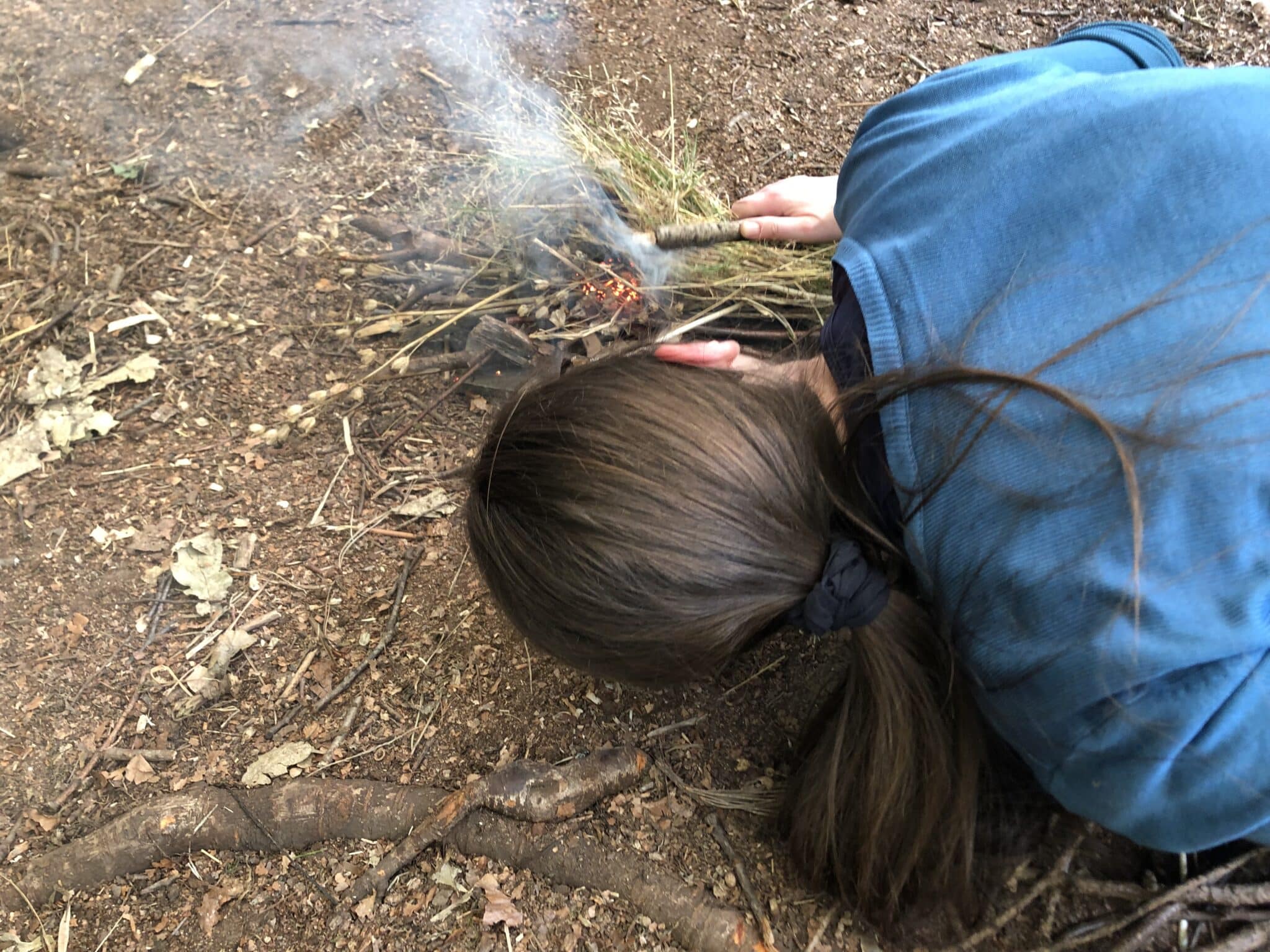
Uses:- The leaves are very succulent and very useful as the lubricant in the top of a fire bow set. I only use these when they are already damaged.
- The dried seed stems make good additions to tinder bundles once the seeds have been shaken out.
- The bulbs are said to make a good glue-like substance. I haven’t experimented with this as of yet.
Did You Know:
The British Bluebell is one of our more protected plants. You need a license to sell any part of this plant, whether alive or dead, seed, bulb, or flower. It is protected under the Wildlife and Countryside Act 1981, although its protection wasn’t added until 1998. This protection, unlike many of the other plants listed in Schedule 8, only covers the selling or advertising for sale any part of the bluebell. Unusually for schedule 8 plants, it doesn’t also cover damage to the plants in situ.
Bluebells store their energy over their dormant season in bulbs underground, these live around 5cm or so under the ground.
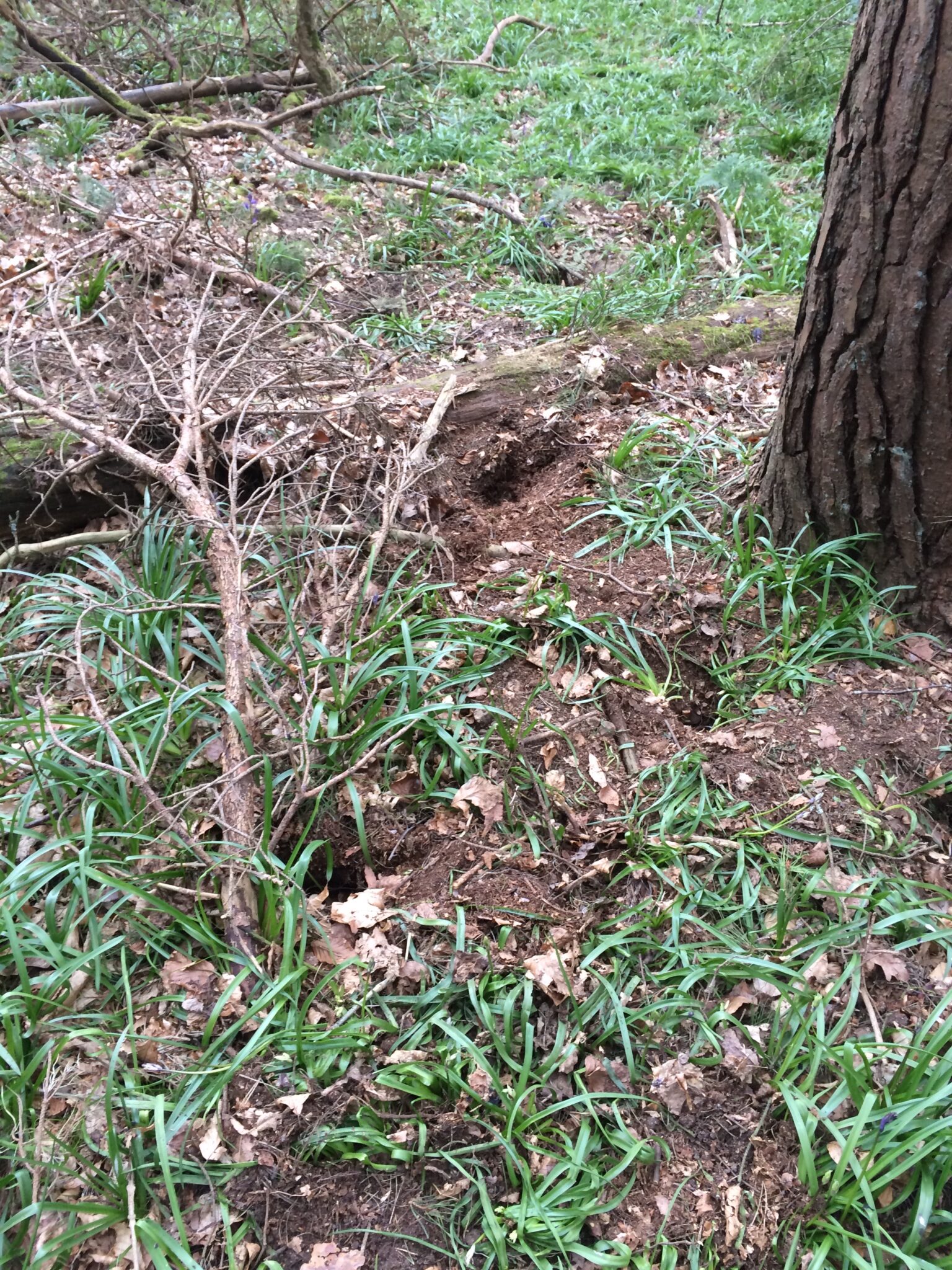
I have often seen badger digs around bluebell patches in my woods, but I am yet to determine if they are eating the bulbs or not. The literature on this is in disagreement, and my camera traps haven’t caught the action clearly enough to be sure.
Bluebells are incredibly rare globally; the UK supports about 50% of the world's population.
Bluebells generally spread via their bulb dividing, rather than their seeds. Their seeds also don’t travel far—imagine accidentally disturbing small cups of ball bearings at about 25cm high in a woodland; they don’t travel that far. Therefore, the spread of bluebells in an area is quite slow.
This slow spread and their ability to be smothered by other more light-hungry woodland ground cover such as brambles contributes to their classification as one of the over 40 ancient woodland indicator plant species.
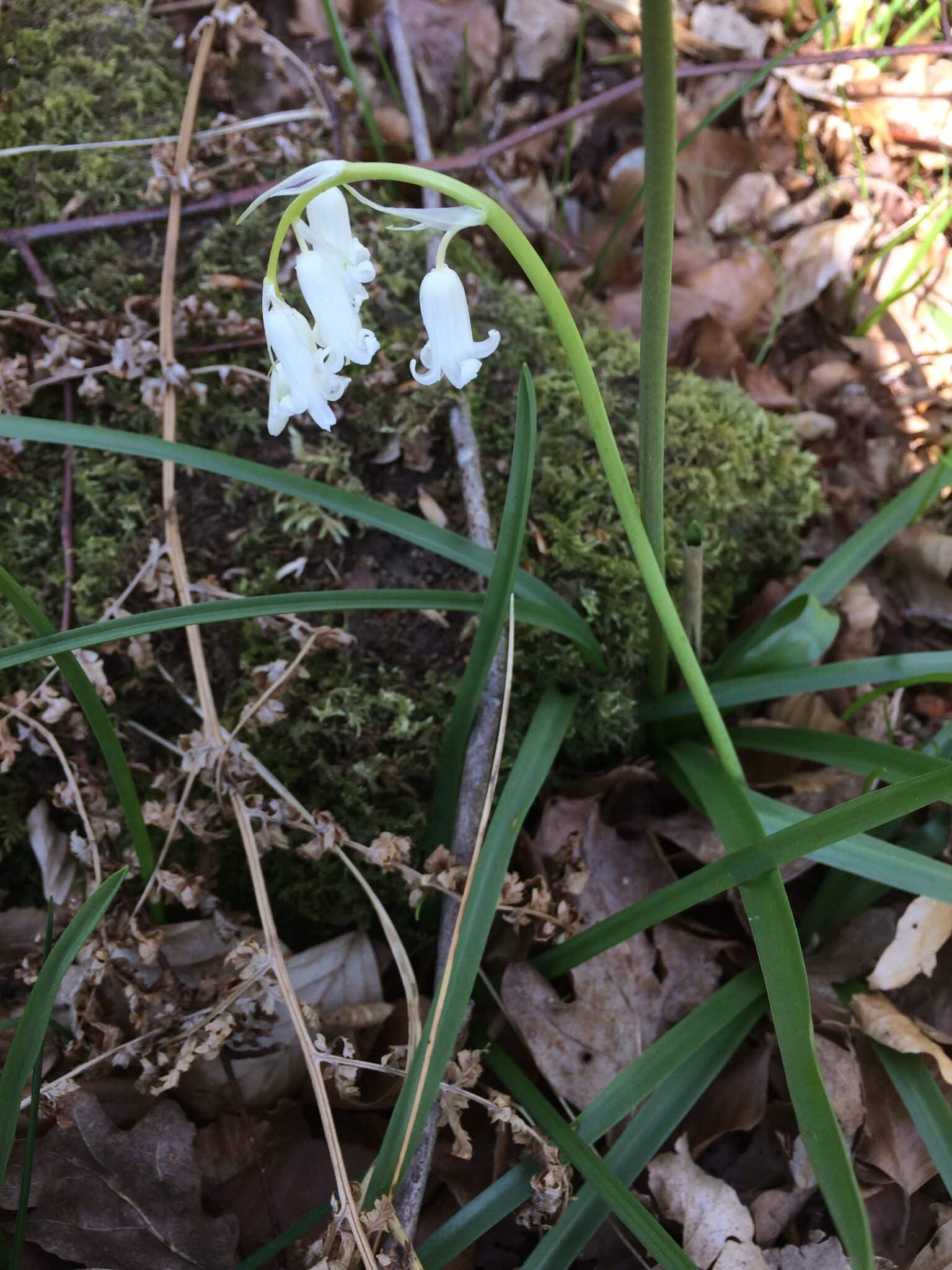
Occasionally you’ll get a white bluebell; where this happens, look around, and you’re likely to see other white ones in the vicinity.
Bluebells, like the majority of our spring bulbs and grasses, are monocotyledons. This means that they produce a single leaf when they germinate from their seeds rather than the more common two. It also means that all of the veins in the leaf are parallel rather than branching.
Depending on the weather, over winter, bluebells can start making their way through the leaf litter as early as November. Their green tops will usually be above the leaf litter layer by mid-January, and they tend to flower in May.
Each year, bluebells die back, leaving a web of slimy leaves on the ground and tall straight seed heads, each with cup-like structures where the flowers were. These are filled with small black balls of bluebell seeds which tinkle as the disturbance of walking amongst them scatters the seed onto the ground.
British Bluebells and Spanish Bluebells will interbreed, and their seeds germinate, but these plants are generally non-viable.
The dried seed stems make for excellent tinder, being proud of the forest floor and drying out quickly after rain or dew. They make a good tinder bundle as well, although don’t last as long as the more common dried grasses. I always encourage people to shake any steps they collect to scatter the seeds in the vicinity of the plants before using them.